RIORI Presents Installment #225: Roland Emmerich’s “Moonfall” (2022)


The Film…


The Players…

Halle Berry, Patrick Wilson, Michael Péna, John Bradley, and Donald Sutherland.


The Plot..


The Update…

Back online thanks to the folks at Scarecrow Video! Check ’em out. No streaming to be found. Just discs and movie geeks.


The Rant…

Did you ever consider the legend of the werewolf has no definitive source?

We have Stoker’s masterpiece summing up all the nasty details that makes vampires vampires. Shelly’s seminal Frankenstein has informed us that f*cking around in nature’s domain could yield Freddy Kruger, Michael Myers, or Jason Voorhees. There are myriad historical records bidding caution when it comes to exhuming mummies (recall Carter’s expedition). Hell, most cryptids have a backstory, if only by word of mouth. Sasquatch, Nessie, the Wendigo, the Jersey Devil. By all accounts myth and tantalizing possible. Like that urban legend about consuming enough Mountain Dew will earn one a fighter jet. True but not true. Did the folks at PepsiCo check the receipt?

We may suspect Bigfoot is out there somewhere. Loch Ness is pretty deep. Egypt had a lot of mummies (go visit the esteemed British Museum campus again), and Ed Gein completing his wardrobe with a belt crafted from fallen women’s nipples that no longer needed them. Stinks of weird, right?  But all those monsters have an origin story, be it legend, spotty evidence, or maybe the Zodiac Killer had an accomplice.

So what’s deal with werewolf tales, Warren Zevon’s hit notwithstanding? There are some legends based on superstition regarding werewolves. Just maps, legends, and no true north. Maybe that’s why the story of the werewolf is so dodgy. Such a legend lurks and made real by suspicion, and not a peck on the neck.. That’s a cheat. According to endless movie critics (Hi!) who have their own take on perhaps threatening monster movies. As implied everything scary stems from what we don’t understand. Fear of the unknown. Werewolves are scary, but what wellspring did these lupine devils rise? None. There are legends, but nothing definitive. If that were the opposite perhaps those lycanthropes did not exist, people knowing the source of the scourge that kept eviscerating the plump sheep flocks when the moon grew fat.

From my research under the influence of wolfsbane (the X-Man, not the plant. Tell you later maybe), a great many stories about the werewolf are—surprise!—myriad, with nary a solid story to bandy about a roaring fireplace. Mostly hisses and whispers. If you ever caught An American Werewolf In London you may be hip to what I’m suggesting.

So. Regardless of culture humans have been a species of storytellers. The verbal tradition has been sacrosanct ever since we crawled out of the caves. Perhaps longer. We weren’t able to comprehend the vagaries of nature, so instead we created stories—myths, legends, what have you—to explain away whatever force against us had some beef with. Ancient man created tales on the constellations he saw in the night sky, the classical Greeks created an ever ongoing freaking soap opera about the Olympians mucking about in day-to-day Hellenic culture. Norse mythology is a melting pot with too many fingers in the soup. Yet all these tales of the fantastic bear one true following: origins, be it a natural bent, or to just make sense of the insensible. Most of these origin stories were indeed understanding nature, with a canny degree of imagination. For instance one of fave Greek myths is the one about Hephaestus (or in Latin, Vulcan Mr Spock). He was the god of fire, and the patron saint of blacksmiths. Mt Aetna was always fuming, but seldom blew it’s stack. That was Vulcan’s workshop, him eternally toying with the mixtures of metal. A myth? Sure. Probable back then? Well there was this empirical evidence and all. So why not? There was at least an origin to the myth based human observation. It was something to hold onto when a volcano erupted. BTW: Vulcan = volcano in the modern vernacular. Something stuck to nothing I guess. Anyway…

A former coworker told me that lunacy was a thing. Whenever the Moon grew full his grandmother’s dementia got worse. I told him kindly that was bullsh*t. Then again I had heard many stories from cops and hospital staff that when the Moon is waxing gibbous how lordy the reports peak. That and milk appears to scream out of the stores. No joke. I worked on a supermarket for a time. Guess folks bought a lot of cereal then, also. Some sort of low level French Toast Panic Syndrome I figure

Whatever. The original belief that a full Moon hypes up lunacy must’ve been one of those archaic beliefs to explain away spikes in madness, abhorrent behavior and whatnot. Just like the tales  of the werewolf. Many years back I caught a doc on the History Channel about the legends and origins of infamous monsters (I think it aired around Halloween appropriately). Sure, Edward Herrman spoke about the history of vampires, zombies, and cryptids. Again all those nasty beasties could be traced to some definitive origins. Werewolves though? Not so much. What could be agreed upon is that when the Moon grows fat it invites lycanthropy. That and if a werewolf bites you you’ll become a werewolf yourself. Running amok in Kent.

That was it. There was something about where the expression “a wolf in sheep’s clothing” came from. Otherwise that was it.

Despite what the title of this week’s movie is, my coworkers comments got me to thinking. As of this writing I’ve never seen Moonfall, and havw only heard rumors how our only satellite might bear us ill will. Werewolves notwithstanding our Moon has often been regarded as a portent. Think about it. The Greek Goddess of the Moon Selene sliding over the night sky was the avatar of time; tempus fugit. See you later…maybe. The Norse believed the moon was male, called Máni, pursued by the wolf Hati. One day, it was said, the wolf would catch the moon, marking the arrival of Ragnarok, the end of the world. Heck, there was even an ep of Star Trek: TNG that alluded to the end of things when the Sun would quit chasing the Moon. The next day may not arrive, Mr Data.

There might be a convincing, contemporary argument out there that the Moon—a full one—indeed tends to mess with a select population’s cracked brainpan. So if a full Moon turns average folks into persons of interest then why? Even that myth about Hephaestus made some sense. No surprise, but I have some theories, and they revolve storytelling—oral tradition in specific—and the eerie pull of nighttime. Esp when that ol’ debble Moon grows fat and looming.

Wait. Never mind. I said “contemporary,” and have not seen Moonfall yet. I’ve babbled enough. Let’s get to the meat of the matter, shall we fellow lunatics?

PS: this installment was completed on 02/01/2026. They call it a Snow Moon.


The Story…


The Breakdown…

Ah, Roland Emmerich. The 21st Century’s mutant version of John Guillermin.

Right. Who?

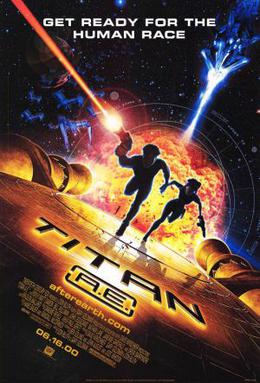
RIORI Presents Installment #224: Don Bluth & Gary Goldman’s “Titan A.E.” (2000)


The Film…


The Space Cadets…

Matt Damon, Drew Barrymore, Bill Pullman, Nathan Lane, Janeane Garofalo and John Leguizamo, with Tone Lōc, Jim Breuer and Ron Perlman.


The Plot…

The year is 3028. A groundbreaking scientific experiment known as “The Titan Project” incurs the wrath of the Drej, a hostile race of aliens made of pure energy. The motive of their invading Earth is unclear, but Prof Sam Tucker—head researcher on the Titan—has a few theories.

Determined to wipe out humanity, the Drej initiate a massive attack on Earth, forcing the human race to evacuate the entire planet. But before the mass exodus Professor Tucker leaves his young son Cale a gold ring, promising him that there will be hope for humanity as long as he wears it.

Then Earth goes boom. Humanity is scattered across the galaxy. The Drej have succeeded in their awful campaign. But to what end?

Fifteen years on as a castaway, Cale isn’t very hopeful of Dad’s promise. Having your homeworld obliterated will do that to you. Lost, desperate, forlorn, and pissed off.

But Cale Tucker still wears that ring.


The Rant…

Don Bluth is the anti-Walt. And what begins with his titular studio ends with gorillas.

I am so f’n sick of the Disney movie machine, which is funny because I enjoy most of Uncle Walt’s animated output. Disney’s animated films (not the reclaimed Pixar flicks, which I adore for their refreshing lack of pretense) are pure escapism with no apologies. And I am loathe to admit that’s cool. I’m not a snob nor a gatekeeper. A geek maybe, but I believe that way of thinking invites an open mind. At the Disney core it is and always about fantasy. The House Of Mouse’s formula though? Yeah it works, but so does your average, worn out McDonald’s fare. Even when the shake machine is working.

Walt never took a hard left into Mango Pepsi territory (that crap went by the way of VHS), and never offers a hard sell. That’s my issue: Disney plays is safe, and I’m bothered how and why this works. It’s akin to willing drink a second cup of tainted Flavor-Aid. And Disney fans always demand a third cup. Same as same goes, until one finds themselves sick to their stomach. And still queue up for Frozen 3. A Mango Pepsi may be in order.

My big gripe is about the stolid Mickey Machine. Whenever the writers and animators try to push the envelope with their works the axe comes down. Despite the fact that Uncle Walt was interred pushing 60 years hence his ghost still dictates what makes for good movies, merch, and cruise lines. Mostly merch and leveraging deals with ABC, Lucasfilm, Marvel Studios, 20th Century (Fox), FoxNews, Hulu, Jim Henson’s Creature Shop, Pixar, Epic Games, Saban Entertainment, the third largest navy in the world and many other kitchen sinks that have yet to be acquired let alone built. I may be implying that the movies first have fallen by the wayside as a viable commodity at Disney, almost like advertising. Uncertain threre, but under such a rigid doctrine Studio Ghibli’s Japanese sensibilities might have been spirited away resulting a neutered North American audiences to just buy the disc then and forget the silver screen. Since Hayao-san’s movies only drop on DVDs. Cartoons overseas are often more adult for adult moviegoers, and not attached to those 1970’s wristbands that gauged the test audience’s pulse rate.

If you don’t stop squirming it’ll only hurt more.

It’s all good in the ‘hood regarding Walt’s ethos and acquisitions (Baby Yoda anyone?), however it should be all about quality, not quantity. As we may have learned from the MCU too much flash and not enough dash does not quality lend. Other examples are from the so-called Renaissance of Disney films starting with The Little Mermaid and concluding with Tarzan and all its Phil Collins glory. And I like Phil Collins. I enjoy Disney flicks, but I don’t respect them much anymore. They are beautiful. They are musical. They are predictable. They are only so much bubblegum and as easily disposable. Which is why I got hip to Disney outcast Don Bluth’s offbeat flicks. I was in 4th grade then, so I didn’t get what I was getting, but I got it.

According to the party line Bluth was an animator/writer at Disney who grew tired of their formula. He wanted a little more meat on the studio’s bones. Animated movies with a PG rating. Make some films with a little more bite, for both young and old. Animated films shouldn’t be puppy dogs and ice cream all the time. So he left the House of Mouse with a few like-minded friends and created his own animation studio bearing his name to make his left-of-center movies, as if to be a middle finger to the oh-so-safe and therefore more profitable Disney Machine (which later bought the rights to his stuff). Kinda like Peter lensing for a fiver for Paul.

I’ve learned in my misspent life that when a safe, established pop culture construct gets derailed interesting things happen. Stuff like Prohibition. The Space Race. The Civil Rights movement. Stonewall. Punk rock. The Internet. Olestra. All of those touchstones affected you whether or not you noticed it. Futurism. Bluth figured out that Diz was still in the 40s come the 70s. Time for a twist, if only to satisfy Bluth’s projects: edgier, more mature animated movies.

His first inspiration came from a pack of rats. Dig. Not from some Stephen King pastiche, but a study in how a society forms. Mrs Frisby And The Rats of NIMH. Wait. A de riguer 4th grade reading as how societies are formed via experimental drugs, eugenics, and fascism in an animated film? That’s some heavy sh*t, and lightyears away from Ariel’s love story. I suspect that Bluth was champing at the bit to overturn Walt’s studio’s draconian formula. Again, dig. Comedy begets tragedy. Here’s your shovel.

NIMH was the first posthumous Disney animated flick that openly used the term “die” as a plot device. Even to say the word was tantamount to Diz blasphemy, yet the baddie being tossed off a cliff is an okay out. And shudder we had a principal character say “Damn!” in the proper way we as humans do. I’m getting the vapors just thinking about it. I mean, damn. These weren’t just cells. They were charactersNIMH was rated G just because it was a cartoon, and any artistic structure was blinded by the rating. Here’s the first gorilla, about 25 years after the notorious NIMH strutted down the runway.

All of Diz’ principals, from Snow White to Tiana were not fleshed out personalities and indeed characters, but were carved out of the Machine. Cookie cutter. Every plot involving a Princess ends the same way (save Beauty And The Beast, which was the first animated movie to garner a Best Picture Oscar). Happily ever after, as always. Guess it might have been the impetus to Bluth jumping ship. Thank goodness. We got characters instead of “characters” with DB Productions. I guess I’m pushing some manilla envelope, which are designed to send heavy messages, but so tried Bluth. With curious results. Not poor, but curious. Intriguing actually.

Hence again The Rats Of NIMN. In the recent past Disney has culled many a classic film based on/inspired by preexisting stories. Consider The Little Mermaid, Beauty And The Beast, and even Tarzan to boot. All were great, even with the creative liberties Hollywood likes to concoct. All those films were under the aegis of the House Of Mouse formula however. The princess always wins, the bad guys always lose, and there’s always a zippy soundtrack. As a control when Disney deviated from that blueprint The Black Cauldron tanking nearly put the studio into Chapter 11. Hey, if you’re going to fail try big? Thank heavens for Ariel and that singing crab posting bail.

All that claptrap leads me to this: there was no way Disney would adapt NIMH into a movie. No f’n way. If you ever read the book (as I have, twice) the plot is dense, never cheery, and serves as a portent of d*cking around in God’s domain. Yeah, possible Disney popcorn fodder that. Not. Recall that Bluth is the anti-Walt. Never has a formula, never plays it straight, cards held tightly to his chest, and never, ever cute. That and precious few musical numbers. Just like NIMH.

Which brings us to Titan AE. The latest Bluth film that won’t play nice. Like Steve Earle’s early career (look that up). It was Bluth’s foray onto s/f for one. Also a first utilizing CGI as a plot device. And something else ‘ol Walt never tried: taking hints from anime, both in style and delivery. Not safe. Risky. Offbeat. Defiant. Bluth likes it when you sit and spin.

Don’t dismiss Bluth’s minor successes, with The Land Before Time series, and the American Tail movies as larks. Those were solid animated films, with a kind of West Side Story verve. And verve* is oft absent from today’s Disney flicks. Again the formula. The last time the studio got “edgy” was with Frozen. With Titan AE a character REDACTED another character. As  with NIMH there were some REDACTED  scenes that would never, ever would be shown in a “kids” movie. But it might have been the PG crowd.

Maybe like this week’s offbeat, not-ready-for-prime-time movie kinda thing. So let’s go save Earth.

Sorta…


The Story…

A short time from now, in a galaxy we call home…

Dateline: 3028. The place: Earth. The time: Now.

Cale (Damon) might be the last kid made witness to the global Drej attack on Earth. They are aliens made of pure energy, barely corporeal who have some contention with humanity. But to what end? It doesn’t matter at the 11th hour, as the planet is blown into so much stellar dust. Cale’s oft absentee physicist father Prof Tucker (Perlman) had planned for the worst. This worst, and kept his project secret until the inevitable.

Tucker hangs back from Earth demise to launch his greatest achievement: the starship Titan, supposedly designed for terraforming. And is quickly lost to time and distance, like young Cale to his dad.

15 years later Cale finds himself adrift. A cosmic castaway, if you will. He’s working deconstruction on derelict spaceships for scrap. Scrap is a telling word.

One day eating his slop an old associate of the lost Prof Korso (Pullman) and gun-moll Akima (Barrymore) got hip to Cale’s connection to the Titan. With his (reluctant) help Cale hitches a ride with Korso’s motley crew to head out and find dad’s miracle project.

If only for Cale to escape some unclear vendetta with the Drej. That and to rescue humanity from extinction.

Walk in the park.


The Breakdown…

I’d like to believe Disney eventually took a few hints from Bluth later on. Like with NIMH, The Land Before Time, and Anastasia. These animated movies threw in some mature themes absent from every Disney film from the 20th Century. At least up until the 1990s. Before then Disney plot devices circled the wagon. There is a bit more meat on the bones when Prince Eric got bamboozled by Ursula then Aurora being awakened by a kiss (Okay, the scene as Malificent as dragon was cool), then Belle flourishing under captivity, or even Jafar as anti-genie shoved into his lamp for all eternity. Cruella wants a coat? Lame. Hercules almost has his demigod status literally cut from the timeline? Better.

Well.

You want to understand the success of Bluth’s filmography? Influencing by shaking the sheets natch, but also this key integer: frailty. Virtually all of cast of characters are either vulnerable or at the very least scared. Poor self-esteem. Against the unknown and a happy ending is not guaranteed. Disney sets up as so until the 90s, but Bluth REDACTED with NIMH against the source material, and all the better. Despite how cute the dinos were in Time there was always the undercurrent of dread. For An American Tail we had immigrant Ortho Jewish mice before Jah, all the Almighty had a poor sense of humor. Even groundbreaking Dragon’s Lair arcade game was hot for about a year, then its core LaserDisc got all hinky and dust gathered. But then again that was just probably poor marketing, than and skee-ball is very enticing. In some sense Bluth being a loss leader lends his dire movies a certain appeal. I’d like to believe there are plenty animation fans who enjoy ambiguous stories with bittersweet conclusions, with nary a distressed princess that needs rescuing from herself.

That being said in 2000 Bluth unleashed his grimy, reckless S/F epic Titan AE on an unwitting audience. Titan was light-years away from NIMH and Fievel. Despite what Disney might have taken from Bluth they released an unnecessary sequel as a cash grab fueled by nostalgia: Fantasia 2000. Huh. There are those that may be Mozart, but the rest of us are merely Saliari.

I’ll say it outright. I dug Titan. Not for anything new, or groundbreaking, or even amazed Bluth managed to coax some A- and B+ listers to provide the vocals. No. I dug the execution. Bluth and company were reaching for something. It strained at the seams, but I got what where he was going, or trying to get to. The plot was derivative, but that did not matter. What the clincher was with Tita, Bluth and friends dabbled with anime here, and for a good deal of the film it worked, if not in style then in spirit. For the under-informed anime is a very popular animated medium in Japan. Such anime outings are ostensibly cartoons, but Looney Tunes does not an anime series make. Namely anime flicks may revolve around horror, sci-fi, romance, social commentary, and often a heathy dose of “fan service.” Look that one up on your own time, otaku.

You guessed it. Time to digress. Again.

A lot of folks are entranced by anime for its bold design. It was obvious that Bluth took a nod to those Japanimation wizards with Titan. The blend of CGI and conventional cell art was impeccable, seamless, and has held up well. Very well in fact. It was a subtle lesson in less is more. Kinda like with anime. Splash and dash doesn’t always demand a green screen. Sometimes all one needs is a shrewd palette.

However I think regarding the anime aesthetic, most Western audiences did not see the gorilla.

The what the what?

Okay. This may be the greatest woolgathering I’ve ever done here at RIORI. So please try the veal, and don’t forget to tip your server.

Not is all that it seems between Oriental and Occidental animation, and we ain’t talkin’ about Bluth’s muse. Watching anime against Western animation is like…let me put it this way: you missed something, but you didn’t. New York Neapolitan and Chicago Deep Dish are both pizza, but the delivery of those tasty treats differ. I venture Bluth had a winking eye constructing his box office failure. It’s akin to the horses crossing the river in Ran; look closely here. And again. There’s more that met the eye with Titan, and its execution was so deft you might have missed it. Is it a duck or rabbit? Or platypus?

Titan‘s efforts were again seamless. Digital and practical in synch. Recalls the Chabris/Simon Effect. Won the Ig Nobel back in 2010. Paraphrasing people see only they want to see. What’s active and what’s familiar. Check it:

Who scored the most points? 15 to the Black Team. What about the gorilla?

To quote Genesis from their Wind And Wuthering platter, “Wot Gorilla?” Most people who saw the video never saw the guy in the gorilla suit, only the dribbling. It’s called selective attention, which may have led to Titan‘s undoing. Audiences couldn’t see the forest for the pixels, and that was a shame. With Titan most folks saw the overt, not the subtle. Cognitive dissonance. Burton’s Batman hits different against Nolan’s Batman Begins, if you follow.

Here’s a key scene from Titan. The opening. See if you can find the dots. I’ll wait…

Did you see the gorilla? Maybe, and the following isn’t a spoiler since I’ll assume you’ll check out the darn thing. But the dusky hues of an Earth dying? Our home went boom via accretion of her tectonic plates? Later did Cale use the pythagorean theorem to escape his cell? Didn’t the titular space craft have a passing resemblance to spermatozoa inviting foreshadowing? In the English tongue doesn’t “drej” suggest the term dredge, a device designed to gather material from the bottom level? Maybe I’m overthinking, but doing so made the flick all the more interesting. I’m not saying there was a “gorilla” with Titan, but recall seeing false patterns in the clouds.

Titan blurred the corners on many occasions. Some good, some bad, some lame lines from the A-listers. Whatevs. Regarding the more recent “serious” S/F films, this pastiche from a quarter-century ago must have achieved cult status by now (as all Bluth flicks seem to do), and deserves revision. Back in 2000, blending CGI with cel might’ve been regarded as a novelty, but now almost every American creams their jeans over the next MCU offering, even with Z-listers like Morbius The Living Vampire. In short Titan was a lot more sophisticated than it led on as just another animated space adventure.

Wait. That’s not fair. Let’s time travel back the early 90s when Disney’s Beauty And The Beast dropped. It was the first time ever an animated film go an Oscar nom for best picture. Ever. The best animated movie slot crawled into the Academy back in ’03, and I’d like to think that the gorgeous cel set-work was enhanced by this CGI startup studio named Pixar had something to do with blurring the lines for the best. 19 years before underdog Bluth crossed a line. Again.

*clapping*

You’re too kind.

Okay. Enough blathering. Time for the meat of the matter. Granted Titan is nothing original dealing with S/F. But there was nothing new with the original Star Wars trilogy, Forbidden Planet, and especially Independence Day. It’s all about Neapolitan versus Deep Dish. The execution. Use some leftovers roiling in the back of the fridge to make a serviceable—but perhaps questionable—platter. Like my old saw says about playing the blues: it’s not about the notes it’s how they’re played. With Titan Bluth was a good cover artist.

And boy Titan plays it’s animated heart on it’s digital sleeve. Definitely a labor of love for Bluth, who I suppose needed to still prove his mettle. To my memory precious few humans litter his ouvre (ignoring the lesser ignored for fewer humans mucking up the works). It’s easier to manipulate mice on screen. People? Gosh we are yucky. As is the universe that is Titan. Which made it compelling.

However…

Not all of Titan is glowing. We agree that the animation is top notch, as is the curiously dated soundtrack*. Okay the plot is staid, but there are only so many ways the slice a pizza. My biggest gripe was the vocal cast. Save Lane (the wisecracking meerkat from the original Lion King) had some (corny) chops. None of the other principals did voice acting before, and it showed. Our motley crew of the Valkyrie sounded like they called it in. Flat and not comfortable with voice acting. Damon sounded like Damon. Pullman was channeling Lone Star. Poorly. Garafalo was miscast. Only Gune went left of center as the character was—consider a munchkin on speed—but way too over the top like he had something to prove. In sum most of our cast were boring. Here was a chance to work with the most offbeat animator ever, and they all dropped the ball. The cast of Glee might’ve done better cheerios. But to be fair only Barrymore rose to the occasion: goodbye comedic actor, hello sexy and beguiling, where her savvy drips off her tongue.

Not that kind of tongue you pervs.

What really surprised me about Barrymore’s performance was it didn’t sound like her. If you’ve ever caught the original Lion King, you might recall Mufasa’s majordomo Zazu, the snooty hornbill. If you stuck around for the credits you’d see that uptight avian age was voiced my Mr Bean himself, Rowan Atkinson. I was surprised, too. He didn’t sound like himself, so the audience was is fun ignorance about, “Who was that guy?” It might have been her long, flawed, versatile career from an acting family. Maybe a need to reach out, prove a new course. I once heard that when Bluth tapped her for Akima he didn’t want her sound sweet, but sassy and sexy. Drew delivered the goods. That’s kind of a shame really. The other voices should’ve been someone else. If only to generate character. Damon missed an opportunity to branch out, like with video games or an Affleck body double.

It’s rough on a film whose cast is miscast, especially when it’s an animated outing. For every Toy Story there’s a Princess Mononoke (yes, I said it. Claire Danes had no right being our titular hero, esp since we can barely hear her speak). Such is distracting. Oh yeah. That thing about voice actors working alone? Sometimes its like spending a few nights in a coal mine devoid of sunlight. Here’s some science about voice acting is committed to film: only one in the booth at a time.

Let’s consider the first Shrek movie. We have the Laurel and Hardy motormouths Mike Myers and Eddie Murphy sparring. They were never in the studio together. Cameron Diaz as Fiona didn’t realize that she wasn’t singing that song that made the bird go poof. It was the late Leslie Carter. Diaz was amazed she didn’t sing the song, despite being alone in the booth. The majority of Titan‘s cast thought they all were in the booth, which may be why our principals sounded so muddled. And confused. Took out all the gas from the action. Where’s Zazu when you need him?

In the endgame Titan was a spiffy sci-fi flick, as well as being a capital Q quality animation. But that’s it. A lot of fluff, a lot of chaff, a lot of lifting from other more prominent sci-fi movies. Then again S/F is a genre all about cannaibzlizing, and flipping the script. Lucas’ Star Wars: A New Hope was lifted from Kurosawa’s The Hidden Fortress (Lucas provided the director’s commentary for the DVD release BTW). How many times has Metropolis been scammed? And is Bubblegum Crisis: Tokyo 2040 superior to the truncated original series? Eye of the beholder.

I put Titan under the microscope, with a little Vaseline smeared over the lens. No matter how sharp the animation was, the guts of the matter lacked some guts.

BTW did you notice the gorilla? And my skills with split infinitives?


The Stray Observations…

  • “I weep for the species.”
  • Best animated glare ever.
  • “I think we’ve gotta hug.”
  • The “AE” stands for “after Earth,” for the uninformed.
  • *I downloaded the album.
  • “Should I get out and push?”
  • Phoenix. Get it?
  • “Still naked here.”
  • Did Prof Tucker create the Titan to escape the Drej scourge, or was the Titan bait to destroy the Drej scourge? It’s kinda Schroedenger’s cat thing. Cleaning out the litter pan.
  • “I feel better!”
  • Pierce, Colorado. Opening scene or Drej command? You be the judge.
  • “Bullseye!”

The Verdict…

Rent it or relent it? A mild rent it. Nuthin’ new here, but the execution gets ups for Titan‘s sheer bravado. That and the seamless animation with no hidden gorillas.


Addendum…

I apologize for how slow the installments have been posted. Since Netflix pulled the plug on DVD rentals I’ve discovered streaming services are less than selective. Then the month ends, if you follow. For now I’ve been leaning on some homegrown rental sites…whose delivery times are insufferably long.

I may have to time travel back to 1990 to get sh*t done around here.


The Coming Attraction…

When the sun rises, where does the Moonfall?

I’ll give you one guess, and the first doesn’t count.


RIORI Presents Installment #223: Brian de Palma’s “Mission To Mars” (2000)


The Film…


The Players…

Tim Robbins, Gary Sinese, Don Cheadle, Connie Nielson, and Jerry O’Connell, with Armin Meuller-Stahl, Peter Outerbridge, and Kim Delaney.


The Story…

Dateline 2020. NASA has approved of a manned mission to the planet Mars. Rovers can only cover so much territory. Willing but naive Commander Graham has been plucked to be the first human to set foot on our neighbor? The mission is dubbed Mars One with a very serious objective: could there be traces of ancient life on the Red Planet?

Nine months later…

It’s Mars Rescue, under the command of Graham’s mentor Blake and his fragile wingman Jim. Things have gone inexplicably, catastrophically wrong. Graham and crew have evaporated. Base camp demolished. No sign of life—Martian or otherwise. No sign of activity save a few…graves? And what’s up with that occult dusky mountain looming over the landing site?

“Houston, are you reading this?”


The Rant…

This is kinda funny. As of this writing the James Webb telescope has detected an exoplanet trillions of light-years from Earth, which may have signs of life. More on that later.

As a species humans are a curious lot. I don’t mean odd or unique, just we ask a lot of questions. We’re still odd and unique. but still always curious. A silly example of modern day wonderings would be if the light in the fridge really goes out when you shut the door. It does, by the way. Try closing it from the inside. Curiouser and curiouser, as Carroll mused.

I ask a lot of questions. Too many. It may be my undoing. Why this? Why that? What the hell did you do to your hair?  Other stuff like what is the secret formula that makes Coke so addictive (the cola, not blow)? Or where did put my keys? Or even when my daughter and I discuss the sociopolitical undertones in Spongebob (EG: How can afford such a nice pineapple home on a fry cook’s wages. She thinks his parents bought it for him)? A great many ask a lot of questions if only to understand our place in the world. Simple ones or no. Or the specifics regarding pineapple mortgages. Is SpongeBob on the Dole?

Sorry. Not sorry.

Some questions are better left unanswered. But when opportunity strikes—right place, right time—the best questions may yield very odd and/or unique answers. And possibly more questions.

We’ve all heard this story. Sir Isaac Newton was beaned by an apple on his noggin, which was the impetus to his theory of gravity. Not quite. When Newton was teaching at Cambridge he often relaxed in the school’s garden between classes to chill out and fuss with his notes. One day a real apple thumped to the ground nearby and he asked himself a very good question: “Why do things fall down instead of up?” Chances are he began scrawling new notes.

Sir Issac us is revered for the being the father of modern physics, apples notwithstanding. His curiosity is akin to other trailblazers that were all about why, what, and how. Consider Galileo’s study of the heavens. Or Friedmann’s theory of the origin of the Universe (EG: the Big Bang Theory). Or the “Wow!” signal recorded by one Jerry Ehman, a radio astronomer. Or nowadays the prosaic theory of relativity courtesy of good ol’ Albert Einstein. Big curiosity abounds, ever if we meager folks miss that drift and just ask about the illuminating power of a fridge.

We are overloaded with questions; some may have an answer. In the greater view most do not. To be honest our species is awash in ignorance, and only a select few still search. I feel one of the greatest unanswered questions plague most of our curious selves, and trying to find an an ultimate answer…if we ask the right queries and possess a great amount of patiene Perhaps the biggest one, fueled by curiosity sans any ethanol the Lord may rain as manna. I’d like to think that this is biggest question of all. Dig.

Esteemed astronomer, SETI co-founder, and TV host, the late, great Carl Sagan took a nod from one of his formers regarding one of the biggest question ever: “Are we alone in the Universe?” Well, based on Sagan’s many thoughts on our place in the cosmos “Earth is a very small stage in a vast cosmic arena.” I emphatically say I follow, but Earth is a very small grain of sand on an inconceivably vast beach. There might be an answer there. Truth. In a more grounded view we all own smartphones, bur know precious little about they work, despite being our window on the world. Two decades ago none of us could ever consider that ubiquitous tech couched in the “in your pocket” meme. Now that tech is commonplace, yet perhaps inconceivable back in, say, the 1990s. This a sort of “If I knew then what I know now” situation. I bought my first proto-smartphone back in 2001. I worked for T-Mobile in tech support heading up a select few of us geeks to hook other geeks up proper. Christ you should’ve been there. We scant few worked as if we were at a Comic-Con. Endless new tech swag coming down the line, us tasked to figure out all this brand new sh*t work. I should say that most of the new phones were yet to be unlocked by T-Mobile, but you how it goes. People want the latest shiny shiny.

I’m getting somewhere. I promise.

Me and my crack crew were unloaded with this tech to figure out their nuts and bolts. Today such “smartphones” would be considered primitive, even laughable. Some of these devices were the Nokia (remember them?) 9000 Communicator. It was folding model like newer Android phones, but was a large as a conventional land-line handset with a full keyboard, grey pixelated screen, and could make international calls sans your plan’s rates. Windows introduced their Pocket PC. It resembled a modern iPhone—boasting a color screen!—but had only an hour of battery life. That’s if you kept the brightness level to the lowest setting. I was the only one who owned a HandSpring Trēo, from the guys who made Palm Pilots back in the 90s. The thing was slim, and kinda resembled Captain Kirk’s flip communicator. First device ever to feature talk, text and ‘Net. However, HandSpring’s browser Blazer read like a Tetris grid; it would break down a website into quadrants, which was the grandad of doom scrolling. Awesome crap, but only awesome until the novelty wore off.

What I’m talking about within the realm of questions and answers is a key element that pushes us to just ask things. We’re just trying to figure stuff out, and be satisfied when we find the answers. It’s a prosaic throughput of inquiry, answer, sated curiosity, and then novelty. As I said, our sharp smartphones—which we take for granted—no matter how flash it is comes down to artifice. After me and fellow dorks figured out the “special” tech the wonder was gone. And let’s face it when the wonder is gone it’s time for Chicken McNuggets.

Wonder is infinite, because it never reaches an answer. There is no throughput with wonder. Which I feel that most of the greatest questions are borne from the sense of wonder. The true may be out there, but better in the abstract not the concrete. I mean come on, do you really want to know what’s in your hot dogs? Nope, but gets me to wonder every time I go to a ball game.

Which is where I get to the point. Enrico Fermi was a pioneering astronomer, as well as a mentor to Sagan. With one simple, seminal question Fermi laid the groundwork for a big question all have been asking since the dawn of humanity. We gazed at the stars and wondered. The Voyager II probe to satisfy this wonder. Then came the VLA. Then came the Aricebo radio telescope. Then the Hubble and later James Webb space-borne telescopes. Then Elon Musk got jacked up on the Mountain Dew believing some discontinued chocolate and almond candy bar held all the answers.

“But where is everybody?”

*whistles the wind*

A very good albeit abstruse question. If the Universe is so huge, and the building blocks of life are quite simple then where is everybody?!?. It’s called the Fermi Paradox. If the Universe is so vast, and potential for life may indeed be out there, and within a broad timeline, and we keep banging away with our space telescopes to discover how many angels can sit on the head of a pin, for f*ck’s sake where is everybody? If aliens exist, then why don’t they do a first contact and say, “Hello Earth? We have a brief on Uranus.”

Sorry. Not sorry.

Fermi declared that “the perceived likelihood of other intelligent civilizations existing in the Universe is based on our complete lack of evidence for them.”  I read a quote once that put Fermi in layman’s terms: “Two possibilities exist: either we are alone in the Universe, or we are not. Both are equally terrifying.” That was Arthur C Clarke. The celebrated hard S/F writer and author of 2001: A Space Odyssey. Between and betwixt Fermi and Clarke’s theories I’ve constructed an idea—more like conjecture—about how alien life is out there. It’s akin to who got there first. Brave people who leapt into the void of why, and looking for some mystery to uncover.

It’s like Leif Ericsson being the first to reach the New World. He knew it was out there, and curiosity drove he and his compatriots to explore if there was life there. Sure, there was risk, as well as leap of faith. But lo and behold there was life. Natives to learn from and trade with, which is why Labrador produces such marvelous shrimp. Seek and ye shall find. But first you must be strong and smart enough to seek.

Here’s that funny thing I alluded to before. That thing about that exoplanet—K2-18B in the constellation Leo—which may or may not harbor life. Well sorry that answer is a big no, despite the scientific scrutiny. Then there’s that ol’ human curiosity always twitching. So K2-18B is a lot like Earth on a grander scale. K2 has oceans, a viable human-sustaining atmosphere, and oodles of fluid chemicals that would support life. But there is no life, not even microbes. So now is the inevitable query once again rears its scratching head: why? What can we learn from K2? What can we learn more about Earth from K2? Is K2 where all the lost laundry briefs go? Unsure. I guess Uranus. Again not sorry.

So “Are we alone in the Universe?” “Does God exist?” “What would you do for a Klondike Bar?”

Let’s suit up, Leif…


…Ever since the Viking probes and rovers Curiosity, Sojourner and other NASA tech have been scanning for signs of ancient life on Mars it’s come to no avail. The National Aeronautics And Space Administration has a hot nut for a manned mission and high time, too. Those robots can only scan so much. What NASA wants is for real astronauts to explore Mars. For real.

Granted, so what might be out there? It falls to newbie astronaut Graham (Cheadle) to command the first manned mission to the Red Planet via the spacecraft Mars One. With his crack team in tow, determined to create a colony there. To study Mars’ atmosphere, climate, weather patterns, and what not to see if humans could actually live there. Or if something once did in the distant past. All’s a go.

Until…

Lost of signal. Blackout. Plug pulled. Graham and crew are off the grid. WTF happened?

Seasoned spacefarers Woody Blake (Robbins) and Jim McConnell (Sinese) are marshaled into manning Mars Two as a rescue team. Not to reconnoiter as a two stage scientific endeavor. Now it’s mission Mars Rescue. Jim, Woody, his astrogator wife Teri (Nielsen), and tech whiz Phil (O’Connell) must locate the Martian Mary Celeste. Hopefully Graham’s team also.

HALO indicates the wreck of some bivouac, and the only other signs of human activity appear to be ruts in the Martian soil. Graves?

So again WTF happened?

Nothing was left to chance for the Mars One mission, save discovering some lost human chromosomes.

Wait. WTF?!?…


The Review…

I enjoy science fiction movies. Check that. I enjoy thoughtful S/F movies. Films such as 2001: A Space Odyssey (natch), Blade Runner, and even The Matrix series. Stuff that makes you question your place in the Universe, digital or otherwise. It’s easy to digest recent S/F flicks as either popcorn fodder or exercises in exercises (like most of the MCU). With Kubrick he was thoughtful. With Scott he was sinister. With the Wachowski’s they were fun. The only metric I can apply with those director’s is their movies made you both think and then believe. And I know that the Star Wars series was more fantasy that S/F, but those have sparked more imaginations than what’s a Nathan’s hot dog is really made of. Prob’ rancor poop.

Moving on.

Those directors above asked “What if?” in their own unique way. HAL 9000 might have been psychotic. Deckard might have been REDACTED. Neo and company might have been inserted into a S/F King Lear kinda derivation. Such directorial trickery spins on a very shrewd, very subtle pinion. One must add just enough sugar to the medicine (or perhaps sometimes urine) to make a S/F fan shake and shiver and then consider what they just watched. You should end up uncomfortable, but also satisfied. Not that the plot was wrapped up with a nice, torn ribbon. I say that considerate S/F movies should ask questions and not leave you bare as to what the f*ck did I just see. Although disposable the Star Wars saga was fun, but with precious few bones that some Wookkie could chew on. You got what you wanted, which may be the problem with Lucas’ magnum opus. Marketing notwithstanding I never saw Kenner champ at the bit for licensing The Black Hole.

So that pinion upon what all thoughtful S/F movies revolve. De Palma is not a thoughtful director. He grinds meat. Sometimes that works, but most of the time it doesn’t. He uses a clack-board as a sledgehammer. Again sometimes that works. But for every Scarface we get a Black Dahlia. There was no space (pardon the pun) for bludgeoning this goofy Mars caper. No subtly   would ever take some Voight-Kampf test. De Palma learned precious little from the success of Scarface. Just keep slathering on that cinema butter. That’s odd considering the above films had more nuance absent in de Palma’s oeuvre. With Mars we had world building going on. Pretty common trope in most S/F and fantasy films. We know how a police procedural works from the endless Law & Order series. Unlike S/F, say comedies are real life, left of center sketches of human error (like de Palma’s Bonfire Of The Vanities. Ouch). Action flicks must have things go boom, and a sweaty protagonist.

S/F and fantasy? They’re all about conjecture. What if? Again, here is Arthur C Clarke describing the two disparate genres (I’m paraphrasing): “Fantasy is what could never happen, but you wish it could. S/F could happen, but you hope it doesn’t.” What if? Such storytelling involves nuance, mindfulness. The best S/F stories hinge on the human factor. Consider 2001Blade Runner and esp’ The Matrix movies. Yes I just repeated myself, but so it goes for the classics like the original War Of The Worlds, The Day The Earth Stood Still, and even Forbidden Planet. Again what if? A great much of de Palma’s filmography lack nuance; sometimes he’s good with that. He wasn’t here. He did not respect the genre, and we’re all laughing at him for it. Or at least

*blink*

Yes, Mars’ flaws are all the director’s fault. Maybe a first here. We have a great cast, a solid plot, and even Van Halen scene injecting some cool humor. The rest of the time it’s mechanics. Like de Palma is just waiting t0 hurl existential knives to our fluffy cast. He does, all of it is forced, and Mars goes down the sewer. Somewhat.

Even with the most mediocre stories (like everything Grisham ever wrote), there are bits that stick with you. Kinda like every Adam Sandler comedy; they’re always dumb, but then again. That’s what I mean, like how kettle corn is bad for you. You follow. Despite Mars being an overcooked turkey I must admit de Palma had a few cards up his sleeve in execution. Namely the human bits, if only to reel the audience back with his execution/shameful 2001 rip-off.

You can taste the bitterness rising, but hold on. Not all was bad with Mars. Just strained.

We had a great cast. Robbins? Sinese? What could’ve gone wrong? Unfortunately plenty. De Palma was all at sea how to best use this cast. All these vibrant actors were ciphers; anyone of them could anyone. Slim chance for any characterization. When a married couple dance in micro-gravity to Van Halen as the most special scene in a movie, everything else is lost. Rote, lame, and misspent. Kinda like the first season of Star Trek: TNG. No characterization. Everything is just there. Clack-board. Next.

Again: Our cast? Great. They may have been interchangeable, but there was a bit of nuance here and there, as there should be. I suspect it was a kind of push-and-pull between De Palma’s hand and a few Oscar winners and nominees on the screen, namely Robbins, Sinese, and Cheadle. Again I thought the cast was great, but also underused. For instance I dig Robbins, but he’s usually a shrinking violet in his roles…until he isn’t. Best examples I can cite was his roles in The Player, The Shawshank Redemption and evenSpielberg’s take on War Of The Words. Reserved, but prickly. Takes some time to appreciate his characters, usually by the second act.

Robbin’s strength as an actor is to not be buoyant, and never play some alpha male like Woody. It was jarring. I understand that a lot of you don’t scrutinize a certain actor’s CV. I do, because I am a geek. On the flipside there have been tons of actors known for certain styles by their choice in roles. We all know that Bruce Wills is known for his action/comedies. That John Wayne was mostly known for Westerns and war dramas. Dame Judi Dench was always regal and no nonsense. And Ryan Reynolds is great at being Ryan Reynolds. Robbins should’ve fired his agent for suggesting Mars. He lacks the fortitude of being the lead, which is why we enjoy his stock-in-trade performances so much. He got first billing with Shawshank, but Red was the lead. Sure he was the protag in The Player, but the ensemble cast drove the story. I could say something about Howard The Duck, but I won’t. In sum Robbins works best in the shadows, not leading a space exploration team.

Another actor who is so entrenched in an iconic character evolved out of only one role so palpable. Sinise as Lt Dan Taylor in Forrest Gump. And him being so wobbly as Jim was off-putting based against his credentials with the Steppenwolf Theatre Company and his shining turn in is own direction turn at Of Mice And Men (John Malkovich played Lennie. Nuff said). Sinese should of been Woody. De Palma was short sighted in the least. Like I implied, most of De Palma’s dramatis persona were dry and chess pieces. A shame.

Don Cheadle is a great, reliable character actor. That’s it.

Not all was lost with Mars. We’re world creating here, a la a somewhat retarded Clarke vision. Read: sloppy. I must admit De Palma did yeoman’s work with Mars’ settings. For instance Mars Rescue looks like how a long distance spacecraft should appear. A mix of the space shuttle Atlantis, the Discovery, and a Saturn V rocket. It ain’t no Enterprise, but based on current tech the ship makes sense, if not inviting. Looked like a low-grade summer camp. It’s funny how grand the setting is against how comfy the sets feel. Like when Andy played catch with Red (wink wink). Everything with Mars was big within confined spaces. The spacecraft, the Martian surface, even the final scene had awesome space. Despite how claustrophobic space travel is supposed to feel (EG: The ISS has the capacity to house 7 astronauts in a space of a trailer home, minus the propane tank). Mars Rescue, despite its minor structural flaws looks like it’s ready to get the job done. I wish it were a Lego set.

The sprawl of the Red Planet was ominous and crushing, made more so due Graham’s survivor’s guilt. The wide open spaces invites a deeper meaning somehow, like man is definitely not to leave Earth. Mars setting is unforgiving as it’s intimidating. Saw a YouTube video once on how quick one would succumb to the other planets’ hostile tropospheres. Mars has a thin atmosphere of unbreathable CO², and windstorms powerful enough to shred your EP suit in a matter of minutes. Yikes. Small wonder that at the beginning of act one a nasty squall comes out of nowhere and renders Graham’s team REDACTED. The dread De Palma invited at the outset was ideal for this kind of S/F. Namely the classic trope of the fear of the unknown, and all through the film there is this subtle, alarming sensation that anything could go wrong at moment’s notice. Mars One vanished. Graham vanished. Creepy. The Planet Red never gives up her dead. There was bitterness rising, but when De Palma is given the  right script uneasiness ensues. I think that was the only facet of the film’s progression that had the director focused.

I don’t feel that Mars was designed to be fearful, but some undercurrent would not let me be. Must have been some looming claustrophobia against the big feel. Hey, you gotta generate tension somehow if the cast/script was out to lunch right? I suppose the underlying theme with Mars was a creeping sense of something sinister afoot, waiting. Esteemed movie critic Leonard Maltin defined such unease best. He was reviewing the original Alien, and asked the apocryphal question (I’m paraphrasing): “Alien answers the age old question that if the house is haunted why don’t they just leave? Well in space there is no place to go!” Facts. Within terra incognito you don’t know which way to turn. Being lost. Out of synch. This theory is where the real tension lies with Mars. I’d’ve applied a PG-13 rating, if only for all philosophizing.

*burp*

Who want’s a Dr Pepper?

Now we meet our quandary. The dynamic between spacefaring and the mystery it invites. The third act landed like a thud. It stank of dozens of S/F films, was lazy, insulted the dyed-in-wool fans of the genre, and seen a mile away. Anyone who has ever seen the original Planet Of The Apes, Close Encounters Of The Third Kind, or even The Arrival saw was where Mars was going. “We’ve met the alien and REDACTED.” You get it. Mars’  big reveal was “Oh come on!” The ultimate use of space, desperation, and running with scissors De Palma created was reserved for the third act’s poor man’s Trumbull dream. Even the low level CGI was well anticipated. I’m not going give the final act away, just cite a pivotal ep from Star Trek: TNG. It was called “The Chase.” YouTube it and you might get it.

So what have we learned? Mars is a dangerous, scary place where the sand eats astronauts. Intelligent life may exist there, but not a potential benevolent one. Robbins passed the shrinking violet crown to Sinese. The movie was rote S/F, but it did have a certain charm. De Plama should’ve stuck to unsubtle films like The Untouchables, or Carlito’s Way. Space is not the place to be, and Mars was a mish mash of all of this griping. Bitter and the sweet and all that.

Ah well, just sit back and tolerate the bumpy ride. I did.

Here’s a barf bag.


The Verdict…

Rent it or relent it? A very mild rent it. A popcorn flick, to be sure. Mostly a lost opportunity, Lieutenant Dan.


The Stray Observations…


  • “Drifting through eternity will ruin your whole day.”
  • Nielsen has a terrible American accent.
  • Why does Cheadle always end up misused in his choice of roles?
  • “Some couples dance, others go to Mars.”
  • Elon Musk must’ve read too many Flash Gordon comics. Planet hopping ain’t gonna be like some pleasure cruise.
  • I don’t know why I liked the take where O’Connell slaps his smartwatch, but I did.
  • “When we get back, we have got to try this in the simulator.” (groan)
  • Great cinematography. Gotta tip some hat.
  • Consider this as a sci-fi Hardy Boys caper.
  • “…Please leave a message after the beep!”

The Coming Attraction…

The Titan AE project was designed to save Earth from imminent extinction. It’s a good thing that the one befallen to rescue the planet was Matt Damon.

He was Jason Bourne, after all.


RIORI Presents Installment #222: DJ Caruso’s “Eagle Eye” (2008)


The Film…


The Players…

Shia LaBeouf, Michelle Monaghan, Billy Bob Thornton, Rosario Dawson, and Anthony Mackie, with Michael Chiklis, Bill Smitrovitch, Ethan Embry, and Cameron Boyce.


The Plot…

Stanford dropout Jerry (LaBeouf)  learns that his brother, an Air Force officer has been killed in the line of duty. Not long after the funeral, Jerry finds a large sum of money in his bank account, along with his apartment filled with enough firearms and bomb-making materials to start a war.

Out of nowhere Jerry receives a phone call from a woman who warns that the FBI about to arrest him and he needs to run. Disbelieving the voice, he is caught by the FBI and interrogated by Supervising Agent Tom Morgan (Thornton). Whatever tale Jerry screams about his innocence Morgan understandably ain’t buying. There were a sh*tload of guns at Jerry’s flat, after all.

While Morgan confers with Special Agent Zoe Pérez (Dawson), an expert in terrorist tactics, has some suspicions about Jerry’s circumstances. Then when his one phone call comes, Jerry’s back with the woman on the end of the line. She arranges for Jerry’s escape and directs him to Rachel Holloman (Monaghan), a single mother who is as unremarkable as a stop sign. It’s her turn with the woman on the phone attempting to coerce her by threatening her son Sam (Boyce) to be the gun moll to Jerry’s mission to…

To what? Escape federal prison? Honor Sam’s sacrifice? Fulfill some debt? Who knows?

Jerry and Rachel have to join together to figure out where they are being led. By what and what for.


The Rant…

At first I wanted to start this rant with an alarmist angle regarding AI. But I’m not an alarmist, just a concerned citizen. A jaded and cynical citizen, but not an alarmist. I don’t cry wolf, throw shoes into into the works, or pretend to be some Ethiopian prince. To wit the themes of writers such as Michael Crichton, Upton Sinclair, or even Noam Chomsky can be considered alarmist, and for the under-informed the term refers to the often unwarranted exciting of fears or warning of danger (definition caged from Merriam-Webster). They wrote portents about the human race overextending itself via sociopolitics and/or future shock. To be fair such whistle-blowing was prescient to AI rapidly taking over migrant work, social media, and perhaps how Elon Musk’s adolescent mind works regarding public policies. That and naming one of his kids after a quadratic equation. Stuff like that.

Myself? Again I am not an alarmist. I’m cautious person regarding the newest new as a possible boon to our muddled, divided culture, but not some shepherd cursing his flock either. No. However I am going talking about AI for a bit. There’s a lot of that brewing with Eagle Eye, but that’s for later in the Breakdown.

Whenever I cage a story about a new AI program these days I want to scream from the mountaintop, “Didn’t you ever see The Terminator? What about The Matrix? Even Runaway FFS?” It’s a hot topic these days. Is AI an oracle or a mere tyro? As with all tech I think that it’s never about devices proper, but those who use it. Consider the Cold War tactic of MAD, for instance. As of this installment TikTok has been under mad scrutiny; all those time wasting videos about influencing, dancing and teens being teens. Not to mention it was created in nasty, ol’ China. It’s nonsense. In reality most folks use TikTok as advertising, be it a law firm, a hospital, or even farms. That’s the low end of the spectrum, as far as the rabble don’t understand.  The media will take blood over sugar any day of the week. But maybe in the endgame the digital Golden Hind may lead us to less work, more play, and figure out where the f*ck did all dem eggz go? I believe all the chickens unionized and went on strike. You can’t make an omelet…

In all seriousness I believe that the general public just cream their jeans over new tech, and no social commentary speaks up and says, “Yeah, but.” Kinda like when Apple releases the next gen of iPhone for all to buy, and we rush to is cosmetic tweaks. I like shiny as much as the next crow, but it bothers me how quick the hoi palloi are willing to dump their hard earned cash into a newish toy. Another trend to buy into. And here’s the rub: the new models of any digital may make you all the lazier. AI may make things “easier,” but you may not understand why let alone how. You may not know what a tyro is, but you may be so without knowing.

Let’s be frank. Algorithms have superseded human thought. Reverse and consider this: Besides your own phone number recall another contact from memory. Perhaps your childhood number, but now? Okay, maybe 911. What about your friends and family? Speed dial doesn’t exist anymore, and you may need a Post-It note to jot down the number. Even landlines have gone by the way of the passenger pigeon. Ah, the ever endless march of technological progress. We use our brains as little more than a hobby, so that’s why FaceBook influencers are self-made selves and push laundry detergent to people who don’t have access to washing machines. Harsh? Kinda true if you think about it.

*wolf howls*

But I digress. Again. And again.

After scanning Eye I set aside any possible alarmist sentiment against my usual bilious diatribes. Let’s put aside ChatGPT for now, if only as some afterthought. Let’s consider freewill instead. It’s not just a Rush tune y’know.

Let’s chat about one’s more organic choices, either regarding film, on the street, or even on TikTok. It’s the freewill thing, and as of late it appears to be trace element stuff. I apologize for being so bitter (mark that down) but Eye was not about the ugly misuse of AI. No. It was a study in freewill, and where it went. Don’t fear. The following has nothing to do with this week’s movie. Sorta. I’ll get off the podium after the following, and then skewer the flick as is my solemn duty.

Here’s the discrete. When in college I took many—perhaps too many—philosophy classes deconstructing the human condition. One was a metaphysics forum discussing was what reality was beyond death, taxes, and where did all the eggs go. Seriously, the overarching theme of one class was all about are we really sure freewill exists? I once read that before we all have a thought there is a nanosecond introduced how one should respond to a given situation. Kinda like priming the pump. Our brain knows how to think before we think. Odd concept, but considering today’s modern algorithms—like how Spotify suggests music aimed along your personal tastes based one one artist—is it so preposterous that the Internet might know you more than you do. Before you know it?

Drop that sandwich. Let me tell you a tale ripped from that old metaphysics class. It was about a thought experiment courtesy of one Peter van Inwagen (if memory serves, which it often doesn’t), an analytic philosopher and the John Cardinal O’Hara Professor of Philosophy at the University of Notre Dame. Go Irish. He knew his stuff. Metaphysics, determinism, compatibilism (the view that free will is compatible with determinism, and all things in between that free will, on fact does not exist. His views were best codified by a narrative poem entitled “Please Don’t Tell How The Story Ends.” It’s about one’s library. Chill. Not what Instagram suggests, or the menu at The Cheesecake Factory tempts. Nope, just a plain and simple disruption to your day. It’s a rough take, but the message suits.Yer welcome.

Van Inwagen’s protagonist finds himself in a huge library. Books upon books litter the shelves. Our PC plucks one of them and opens to the first page that reads why they are here, until the texts suggest him to pick another book for more info. He picks another random book and the words greet him, expecting him to find it. This goes on and on as if the library knows all his thoughts, and make him question that if he really has free will, or just another body pretended to have such. How could these disparate tomes know his motivations before he does? And whatever motivations there are he knows nothing about about. It’s a “Choose Your Own Adventure” from hell.

St Thomas Aquinas—that old rapscallion of thought and determinism—once said, “Three things are necessary for the salvation of man: to know what he ought to believe; to know what he ought to desire; and to know what he ought to do.” Free will in a nutshell, and Jerry may be going nutty along those lines.

Told you I read up on too many philosophy books. Being said Eagle Eye was not alarmist, nor a meditation how AI assists our lives. It was all about how any of us could be randomly plucked up from our humdrum lives and get things all overturned. Really. How does one deal—cope—with that? No more free will, just responses to outside stimulus.

Like a rat in a cage with no food. Pick another book.


The Breakdown…

What I loved about Eye is that well into the second act was the relentless frustration of “What the hell is going on?!?” would not let up. I dig my mysteries, but I’ve never sweat over one. I kept pulling my hair, wringing my hands, and exclaiming, “WTF is happening!” I was very confused, and it was a good thing. The best thing the film had had going for it. More on that later.

We’re probably used to spy thrillers where James Bond, Ethan Hunt or Jack Ryan are calling the shots, with a certain degree of pleased expectation. You kinda know what you’re getting into. Despite his muddled career LeBeauf has never been mistaken for a real “man of action,” even considering the Transformers movies, or that facepalm with Indiana Jones. Shia has mostly been passive as a protag. Wallpaper. Here with Eye he settles into a man of action if only against his will. His free will. It’s was refreshing. Playing the innocent has always worked well with Shia, and now he is the lead of a big budget action/mystery/suspense/techno thriller movie. Innocence lost, and he holds himself well, as if a middle finger to our expectations. Those hulking CGI Autobots were the real stars of Shia’s breakout role, after all.

Ignoring all the folderol this was one of Shia’s better roles. I knew about Shia courtesy of the early 2000s Disney Channel series Even Stevens, where he played a freewheeling geek against his preppie sister. Isn’t it curious about comedic actors can transform themselves into dramatic actors with ease? Think Jim Carrey, Bradley Cooper, or even Hugh Jackman. Not so much the other way ’round, because humor is all about timing. Melodrama is smeary; it’s easy for a dramatic actor to stir the soup. Comedy? Consider DeNiro (Meet The Parents), Eastwood (Any Which Way You Can), or even Pacino (Jack & Jill. Oy).  Shia morphing into a decidedly non-comedic role was nothing short of amazing, esp’ considering his waifish delivery in most of his Even Stevens years. Heck, his performance here were roles away from being comic relief, ignoring the Transformers years as were his (Optimus) prime. Sorry. Couldn’t resist. Moving on.

In a twisted way Eye played out like a Hitchcock mystery. The Master gave the audience enough breathing room to follow the chaos, then boom. Consider Rear Window, Psycho, and Eye’s immediate relative North By Northwest. The hero knows what must be done to set things right, but how is a puzzle. For example how the f*ck some unseen entity delivered REDACTED to Jerry’s flat out of thin air, with a load of munitions that would make General Patton swoon with envy. As with Hitch it was all about surprise. Muddled surprise, left of center surprise but surprise all the same. Eye was Northwest for the 21st Century. Cyber mistaken identity. These days where identity theft is rampant, AI is appropriating employment, and folks are way too concerned about the next Assassin’s Creed installment as a hot topic, this film was not a cautionary tale. Not really. From my observation Eye was a tribute. In sum best keep your eyes over one’s shoulder. Makes for icy tension, with this sharp cast that knows what it’s doing.

The supporting cast was nothing more than brilliant. Let’s put aside Thornton and Saldana (who were very entertaining, since they were so fishy out of water in a flick like this), I appreciated the lesser characters that “defended” Eagle Eye as a necessary evil. Be it Chiklis to bully a finish of a mission under sweat, to Mackie kindly explaining the mechanics of Eagle Eye to Dawson. His naïveté is so endearing, as well as chilling (and this would be the guy to later don the mantle of the Falcon/Captain America). His “just following orders” manque has a lot of cracks, and he may know that. The center may not hold. To sum it up, the characters who are in charge of Eagle Eye are under its eye, so hold it together. Even Sling Blade and Mel playing bass. There was some overarching Vietnam metaphor going on: “We were just following orders.” From who, and where? An oversized Ring camera mounted over your shoulder. Creepy.

What I dug most about Eye was covered earlier, but anyway. Eye was adept both with unpredictability and stretching the suspense. Recall that suspense is immediate, barring a few key pauses. We have have a lot of unease here just below the surface. Eye was angular—that was its assignment, after all—but was made to stretching the suspended disbelief to the max. Well into the again, “What the f*ck is going on here? All the collateral damage in Eye was ratcheted up to 11, not to mention the soundtrack, which did wonders for baffling us.

Yeah. So I say Eye is a meditation on free will, but it’s also deals with shades of identity. For real, how would one respond to having their life stripped away? Considering these days all it takes is  a keystroke to erase one’s existence. Today all our lives pivot on zeroes and ones. Does some dopey algorithm dictate what kind of specialty drink we want at our local Starbucks before we arrive? Explain how wise Eagle Eye was demanding Rachel to take the wheel from some random car after a few shots. Just tow and go and don’t argue with the woman behind the neon curtian. Kinda weird and scary how AI may take your nascent free will to the basement, if only out of survival. Shots anyone?

There’s more on that later. Actually right now, if you please.

The epic sci-fi opus 2001: A Space Odyssey was ground zero for malign AI, warping Dave and Frank’s mission to Jupiter to just “following orders.” Blame HAL, the sentient AI computer running the whole mission. Dave and Frank were placid, knowing that HAL would take care of everything. Until it didn’t. Eye was a similar concept, minus a lazy cast. To wit Eye was fast paced. Maybe too fast. Understood I like my action movies swift. I always b*tch about pacing in movies as my alpha and omega. Eye was fast paced. Maybe too fast. Case in point there were a lot of abrupt scenes that fit the plot, but were jarring against the principals’ unknown mission. And when all seems clear (however this was an action movie) Sling Blade destroys the entire Beltway. Relentless. And there are two kinds of relentless in an action flick, and Eye doesn’t allow much relief beyond seeing someone next Wednesday.

I feel there are a few cue tricks to an action film that enhance the drama. When both are in synch then yes, yes stop drilling we’ve hit oil. First is how to use sound. Most action movies, even these days claim louder is better. Sometimes it is, like when I caught Apollo 13 in a THX rigged theatre. When that virtual Saturn rocket took off the place shook. So big I covered my ears. Sound (or the absence of) can really do a doozy making a movie seem proud. Consider key scenes in the Star Wars movies (EG: assault on the Death Star in ep IV), the copter chase in GoodFellas looming of Hill’s chance of escape in GoodFellas, or the polar opposite when Dave goes EVA in 2001. Recall in Raiders how Indy’s punches sounded like he hit a water heater filled with ground beef. There you go.

Second is lighting, the unsung hero (after pacing, natch). I have learned over the years that lighting enhances emotion in a unique, subtle way. Here’s an example: in Signs we find Mel Gibson wading through his cornfield in the dead of night. It was not the dead of night. It was noon. Noon’s never a prime time to weed out aliens. So what’s going on there? The day-for-night lens application:

Like that.

Eye was adept with this technique. Very much so. I’ve found that with most action flicks the lighting is glaring until it’s not. Consider the original Die Hard, It was either on or off. Worked there considering the “black and white” edge of the film. The first Matrix film had a sickly greenish color, reflecting all being a computer sim. Eye was a manic rainbow. Every scene was scrawled over with a fully loaded Crayola box (the kind with the sharpener in the rear). It was done to enhance mood, and very well. When Jerry was in a corner everything was dull and misty. When Rachel was in a similar setup everything was bright and shiny despite the frantic pace. It came across as cartoonish, but in a good way. Kinda like an assist in kaleidoscopic version of connect the dots. Eye had a lot of dots. You needed all the help you could to follow the trail of crumbs. All in all Eye was a puzzle with no box top to refer to. I’m a LEGO maniac. so this suited me just fine.

Sure. Perhaps Eye might’ve been a soft core brown study in Big Brother in the cyber age; surveillance everywhere, Ring cameras going awry and our digital devices getting the Snowden effect. Free will may be under the electron microscope these days, but after rethinking my drink I’ve come to a different view regarding Eye‘s “message.”

Ever heard of Heisenberg’s “uncertainty principle?” After all my chewing of my own free will director Caruso may have been onto something.

Now allow me to play some jazz trumpet for y’all.


The Verdict…

Rent It Or Relent It? Rent it. Sorry for being so scattershot, but so was the flick. Cool execution, as well as thought provoking, but with not too much thought. Eye was engaging, but what the hell was going on?!?


The Stray Observations…

  • “Jerry Shaw, you have been activated. Your compliance is vital.”
  • K: This movie must’ve taken a lot of airbags to make.
  • “Get in the car.”
  • Despite all the chaos Monaghan’s hair remains perfect.
  • ZERO HALIBURTON.
  • Funny how Saldana and Mackie’s uniforms had no insignia. Lowest bidder I guess.
  • “You planning on being a farmer?”
  • Shades of The Fugitive here, but with a tad less breathing room.
  • Fast fact: Julianne Moore provided the voice for the Eagle Eye. She gets a gold star for sounding practical and sinister. A “I’m sorry Dave. I’m afraid I can’t do that” vibe.
  • “I am not going down as the assh*le that let this happen.”

The Coming Attraction…

First off thank you to Scarecrow Video that still provides an online DVD rental service. That kind of service that Netflix should’ve earned me a gold watch.

Time for another marathon! This time it’s a septet (read: 7) of science fiction movies with diminishing returns. The best ones soar. The lest never take off. So…

What may be out there?  Does life exist beyond Earth? A Mission to Mars may answer some questions.

But first Van Halen!


RIORI Presents Installment #223: Christophe Gans’ “Silent Hill” (2006)


The Film…


The Players…

Radha Mitchell, Laurie Holden, Sean Bean, Kim Coates, Alice Krige, and Joelle Ferland.


The Plot…

Rose takes her adopted daughter, Sharon, to the town of Silent Hill in an attempt to unravel the mystery of her sleepwalking towards a place she’s never been to. After a violent car crash, Sharon disappears and Rose begins a horrific journey to get her back.


The Rant…

Okay. After a decade of installments it’s well known I’m a gamer. Retro console. Ten of those fool black and grey monoliths lurking around my TV, waiting to be ON. Stealing possible memories, endlessly inviting frustrating non-victories, and devouring batteries better left in my mouse, remote or the smoke detector. Open the pod bay doors, HAL.

I had a coworker once who swore that a PC as game platform was far superior to any PlayStation, until the parts needed for tech superiority were trace element since the gamer population of Proxima Centauri had more credits to earn the best processors possible. Me? I have all four Sega consoles in my gallery. They all work great, esp’ with their outmoded CD-ROMs and durable cartridges. Sometimes it’s not all about more power. Gaming should be fun not a pissing contest with endless patches. Let alone a hobby that always tests you instead of testing you. As of the last decade, owning and molesting games on a certain high-end console makes you a prime gamer. For what end I can’t figure. I always figured if the game was fun who the f*ck cares how one played it where on what. Be it Steam or NES. Heck, even Electric Football (I have really dated myself here). In sum, video game fun always trumps the hottest hardware. Recall the sh*t launch titles for the PS2 decades ago. Most folks scored one just for the DVD capabilities. Dark Cloud anyone? Even I was caught in the melee. To wit, us Gen X’ers with our relic NES consoles, how many times did you finish Ninja Gaiden? I did once. Only once. Pushing 40 years on a fossil console powered by sweat, anxiety, and coal. Still ain’t looking for upgrades.

I digress. I am good at that.

When I say I’m a retro gamer it hails back to the ’90s at least. When the first PlayStation was released the gauntlet was thrown down. Dig. I was in a fraternity in college, and besides beer, trying to  out GPA the engineering house, and beer, the main focus of the house was before homework and beer was classic gaming. Our resident tech wiz rigged up a primitive LAN party gaffer taping three Sega Genesis console to keep an ongoing golf tourney, well, ongoing. There was also a brother who had set up an original PlayStation on his big screen TV. The game of choice was a very loud original Twisted Metal, and scores on a white board. I can still hear the guy screaming “I got the homies (homing missiles)!!” to this day. Fun times, no diggity, no doubt.

Our house was a competitive bunch all right. Recall the engineering house, across from our backyard, with real LAN parties and always having cookouts for everyone, even in the winter. They always got the highest grades, and we always almost bested them. We had a pretty good floor hockey team, and would almost beat the rival house. We tried to be a big party house, but we were all geeks before it was cool. In sum we were an also ran, minus our determination to fail upwards. Always the bridesmaid.

Except when it came to video games. Our house could not be beat, so to speak. Which may have been why gaming spilled into everyday Greek life back then. In sum, simple fun and instant gratification. Escapism, plain and simple. Exit reality for a while, or beyond. I don’t recall that perpetual golf game ever ending, and I was a brother for three years, many mopped floors under my belt. Sometimes things may get out of hand, and not in the way you might be thinking. In short I lost time between 2000 and 2002 playing Phantasy Star Online, v.2. It began to fail as an escape, and when your PC gets so experienced where does the competition go? Probably via the next patch.

En toto, gaming is about competition, either by yourself, couch gaming, or MMO. But also the flipsides of escape, challenge, and the instant gratification. That’s why it’s called that; that’s how long it lasts. And that breeze may infect you as building worlds a la MineCraft, or as just some sofa jockey pretending to be a female, genetically enhanced bounty hunter wielding a Darth Maul-esque dual light saber in some old skool SMO.

*whistling*

Simply put gaming is entertainment. Like duh.

Now here’s the rub. Virtually all games on all platforms are driven by some thin narrative. A plot meant to keep the action in motion. Define the quest. If you’re lucky (or not) discover hidden worlds, or simply unlock some skins. The days of point-and-click are by way of the Zune now. It’s all about the mechanics, refresh, and all those other tech specs. And why not? The more sophisticated the game invites all that claptrap about competition, and fun, and yadda yadda. So that being said we could argue that the narrative as the driving force of the game must have twists and turns and intrigue and all of that truck.

To paraphrase John McClane, “Sorry…wrong guess. Would you like to go for Double Jeopardy where the scores can really change?”

The razor thin gaming plotlines are scant, with all the substance of cotton candy. Even the most popular gaming series can be summed up in one statement. In the Mario Bros games save Peach from the clutches of Bowser. In the Zelda games save the hapless titular heroine by defeating Ganon. In every Final Fantasy installment restore the crystals to power and defeat the big baddie behind their lost shine and thereby saving the world (that and always have an airship and some guy named Cid). In Resident Evil expose Umbrella whilst blasting zombies into bloody pieces. And with Halo Master Chief never takes his helmet off. The rest is just gravy, minus any turkey.

The above examples illustrate that video game stories need a lot of breadcrumbs to bake a meatloaf. A plot device does not a video game movie make. Oh sure, there have been a few bright spots here and there, few and far between. Ready Player One, Detective Pikachu, the 2024 take on Super Mario Bros. These are the exceptions to the rules. The rest are utter drivel trying to operate on a shoestring script, focusing on action, F/X, and a lot of kablooey. There was no character development, drama, pathos or logic. Because there didn’t have to be. Not all movies are designed to win awards, but most of those game films designed to allure the hoi polloi didn’t so so hot at the box office despite their crazy budgets. Why? I think the overarching dilemma was pretty simple like those video game plots.

Those flicks were stupid. And maybe shameless big screen commercials.

Sigh.

So this time we’re gonna tackle the semi-popular Silent Hill franchise as “cinema.” I won’t lie nor spoil it for you. Let’s just say K didn’t like it (beyond not liking horror movies save the Alien films). I was on the fence, considering my above screed. Overall I suppose there is some kind of science at work—perverted as it seems—twisting a scant video game plot into a full length film. I never had good grades in science (dang engineering house again), but if there is some metric at work I’m reminded of a simple line from comic Patton Oswalt:

“We’re science! We’re all about coulda not shoulda!”

If only for finishing sidequests…


The Story…

Rose (Mitchell) is very concerned about her daughter Sharon’s (Ferland) unrelenting nightmares. They’re all about someplace called Silent Hill. In reality it is—was—a mining town abandoned due to a massive coal seam fire. A ghost town, still haunted, and Sharon sure has never been there. Odd indeed.

Desperate for some answers, Rose takes Sharon on a trip to Silent Hill. As they reach the city limits some strange girl steps out into the road. Rose veers, crashes and blacks out. She comes to in an ash-shrouded dreamscape preyed upon the ghosts of past tragedy, both lost and unsettled. And Sharon is nowhere to been seen. Nowhere to be found. Nowhere.

Or just plain gone? And to where?

Or when?


The Breakdown…

Like I had said the slight plot that pilots video games have even less weight when it comes to video game movies. The directors take a sh*t-ton of creative liberties to make the movie float even though such enterprises are shot on an already sinking ship. I’ve played a lot of those games listed above, and only the Resident Evil franchise did its best to overcome its 32-bit source material. Thank sinewy action star Milla Jojovich for any weight in the series despite the franchise was silly beyond embrace. Once more not all flicks are meant to win awards, even the Game Awards.

Metacritic gave the Hill series very positive reviews…for gameplay. Have I ever played Silent Hill? No, but I’ve played a lot of games of its ilk. The Resident Evil series (natch), Alone In The Dark, the Doom franchise, BloodRayne, Dead Space, etc. All had the same plot device: destroy all monsters. Some of those games were translated for the big screen, with middling results. As for this movie, with all the more expectations waiting? Welp I had a bad feeling about this Hill flick rather quickly. I did keep my hopes up, for I am an idiot. I once bought a WiiU, so there’s that.

With all good narratives, be it a novel or a movie it’s all about show don’t tell. Video games operate on the dynamic of show and maybe tell. They are called video games for a reason: action first, story third. Here’s a good example: the seventh installment of the Final Fantasy series. It was a blast to play, and Tifa’s boobies sure were nice, but the plot made absolutely no f*cking sense. The same went for VIII and X. Played cool unless you thought about what was going on (like how could Tidus breathe playing Blitzball). These are minor carps, but they defy interior logic when translated into film. EG: In Hill I never saw Rose smoking, so how come she carries a Zippo (that never needs refueling)? Dumb sh*t like that; a forced plot detail that only serves to show and never tell. Not a bad move per se, but this is when we start pulling some hair.

I’ll be fair for a bit. Benefit of the doubt. Hill played out like a video game, but in a pretty good way. This was defiantly a fluff movie, like its kin, however director Gans attempted a show rather than a tell. I must give props to that at least if only that. There really wasn’t a lot of distracting exposition or backstory with Hill; the bogies and charred settings informed us what was going on. Sort of. Gans kept the cards close to his chest, thereby letting the audience to figure out WTF was going on. Took me a bit to solve the puzzle, and that was somewhat rewarding even if I didn’t feel that way.

Let’s clench our teeth and try to keep it positive for a bit longer. Along with that show don’t tell folderol, director Gans was pretty clever if not cagey about what the audience should see versus what was scene. In simpler terms a lot of trickery, if not some practical storytelling here and there. Along the line of game to movie, Gans did a pretty good job of keeping Hill simple despite the trappings. Not only that bright spot but Gans’ pacing was steady, the plot kept you guessing and had this kind of neo-noir film. Sure, this was a horror film, but also a mystery. K astutely pointed out all Sharon’s drawings were clues. The blackouts only occurred during scenes with the siren. There was something about flashlights here. Stuff like that picking at your brain (when the demons aren’t chasing a screeching Rose). That worked okay.

However…

I think Gans took many creative liberties, even for a video game movie. Again, never played Hill but I had this nagging feeling, especially considering the ungodly long running time that something felt amiss. Like economy of space. I’m able to speed run through Resident Evil Zero in less than 2 hours. Less than 1 hour. What I’m getting at is there was too many drawn out scenes to highlight both practical and CGI F/X. It smelled like Gans was showing off how clever he was world-building with scraps from a rote survival horror game. Sure, the F/X were cool, but hordes of ghoulies chasing the principals does not narrative make. Hill was the MCU before the MCU existed. Mostly style over substance. This got boring rather quick. The atmosphere was heavy, yet thin. Then again I had to give props to set designers. Like taking down Shinra and what for Hill was an overall confusing mess that looked cool. K called it all demented. Like the classic Doom franchise.

Again again, too thin a plot if any. But does it really matter? I know, I know. I’m waffling. But to quote K: “I am so confused right now.”

I would be remiss if I didn’t comment on the acting. Everyone was stupid. Rose was dumb. Chris was dumb. Especially Alice Krige’s one-note matriarch from hell Christabella, with her Bride Of Frankenstein ‘do to boot. The cast were all cyphers, stereotypes drawn from a jillion haunted house flicks, and all terribly laughable. Of course not in a good way, or even a scary way, despite Krieg’s over the top, fevered delivery and trying to regain past Ghost Story glory. More on that later.

There was a fine display of stupid acting in Hill (where character development never reared its ugly head). Okay, so Sharon is suffering from somnambulism (sleepwalking for the laymen). Instead of listening to Chris and getting their daughter to a sleep therapist Rose hauls up stakes and trucks in on down to Silent Hill for some answers. Uh, yeah. Smooth move. That device was a 2 hour long exercise in not going down to the basement. But the basement was eternal, eventually boring, and really needed a Freddie to spice things up with that gallows humor of his.

Speaking of basements an aside. Regarding all horror flicks there must be some levity to balance the slaughter. A little sugar with the urine. Sure Kruger was scary, but also witty. Be it one-liners, quips or outright humor to be effective at delivering scares some things need to be off kilter. You know, to let down your guard for a nanosecond just before the monster eats the hero. Shakespeare was a master at this device; a joke before the choke, or maybe just a wisecrack may serve its duty. Here’s an example from the Bard’s magnum opus Hamlet:

Claudius: “…Hamlet. where’s Polonius?”

Hamlet: “At supper.”

Claudius: “At supper where?”

Hamlet: “Not where he eats, but where he is eaten…”

Eew. Get it? Funny in a perverse way. Then enter Rosencrantz and Guildenstern, the Abbott and Costello bearers of bad news. Gallows humor abounds.

Gotcha. Now into the 20th Century. Even the silent Michael “The Shape” Myers punks PJ Soles with a pair of glasses and a boo sheet. Silly. Only after her boyfriend was stabbed into the wall like some trophy. Also kinda funny. Stunts like that invite humor right before scary. Lower the tension right before escalating it again. Catch you off guard, which is why Hill felt so rote. Scary scary scary for all 3 acts. Boring. One gets numb to non-stop creepiness. We need a steam valve opened up just enough to relieve some stress. Hill was f*cking relentless with the scares so much so it felt like squeezing a spent tea bag until the dregs popped loose. Again boring.

BTW Chris was just wallpaper. A device designed for empathy and that only. Bean was wooden and only there to remind us there was a plot in there somewhere, like we needed coaching. Which was a shame how underused he was. He could’ve been some sort of anchor to reality, instead he was a stooge. That’s a real shame since Bean is a very dynamic actor. He was one of the best James Bond villains ever created; a guy you loved to hate. Not to mention his turn in the LOTR trilogy. They guy has range, so why was he so stiff and bland here? He should’ve freaked out more under the odd circumstances, and definitely not over the phone. Lost opportunity that.

Now the coup de grace of stupid acting was Krige’s performance hands down. Now I think she’s a good actress albeit one note, but it’s a good note. Just not here; we’re tone deaf here. Krige has a very long, eclectic, and varied filmography. Despite her CV she’s best known for being creepy and sinister. A fine example of her menacing is the film adaptation of Peter Straub’s horror novel Ghost Story, a fave of mine, in no small part by Krige as the vengeful phantom. Regardless that the majority of her roles are super diverse Krige is at her best being creepy, but not necessarily in scary movies. Like I said Krige is good at menacing. Like Eva in Ghost Story, Mary in Sleepwalkers, Tully in Barfly, and esp’ the Borg Queen in Star Trek: First Contact. Again, menacing, and quite well.

Krige chews Hill‘s scenery into kindling not only with her performance as cult leader Christabella but also her speechifying really muddied the narrative (such as it was). Her caffeinated babbling with the stuff of every loss leader encouraging a herd mentality to be followers, even if the following is riddled with moral dissonance. In a word: demagogue. And Krige has all the sway of a car dealer trying to sell the last Yugo off the lot. Krige has a gift with her acting to be distant; the thousand mile stare. Detached. Unsettling. Not here, just a manic hairstyle.

We’ve scene this stuff before, and hell is it boring. As with Rosemary’s Baby, The (original) Wicker Man, and even Indiana Jones And The Temple Of Doom. We all know how the cult trope works. but at least the aforementioned films offered some twist, Krige fronted the trope with all the subtly of a Brillo pad on a non-stick pan. What the heck was channeling. Insults to her fans of her number one with a bullet skill at being macabre. Krige was nothing more than a non-entity with Hill, and her histrionics were…just stupid. Another lost opportunity. Very cool style undermined by a lack of substance.

In the endgame Hill was dour. Confusing. No fun. This side of horror porn. Hollow. What did you expect from a video game adaptation? There was a germ of a good idea here that hopped the tracks. And that’s a shame. There could have been a juicy meatloaf baked here.

K said it best: “Let’s not watch this again.”

Bet.


The Verdict…

Rent it or relent it? A mild relent it. I kinda dug it, but I didn’t enjoy it. Murky against the pixels.


Stray Observations…

  • “They used to say this place was haunted.”
  • Ah, body piercing and breakfast. No other way to start the day.
  • Ring Of Fire. Cute.
  • Mitchell’s chest sure talks a lot.
  • K: Birds and dust and fog.
  • The Omega Man. Wink wink.
  • K: This is some kind of sick game.
  • Anyone remember the Zune? For real?
  • The canary. Clever.
  • This movie had no right to run over 2 hours long.
  • “We’re gonna be okay.”

The Next Time…

To paraphrase Iggy Pop: Shia has an Eagle Eye on him. He’s under an Eagle Eye.


RIORI Presents Installment #222: Christopher McQuarrie’s “Jack Reacher” (2012)


The Film…


The Players…

Tom Cruise, Rosamund Pike (and her chest), David Oyelowo, Jai Courtney, Richard Jenkins, and Joseph Sikora, with Robert Duvall and Warner Herzog (!?!).


The Intro…

Hey, welcome back aboard the Tom Cruise! For those who may have missed it the first time RIORI is running a mini marathon through Cruise’s lesser movies from the aughts. This installment disembarks here. Hope you enjoyed our trip!

Now on with the show until the next time we meet when the time is right, and the moon is full, and the secret ingredient of Coca-Cola is cracked. Happy Arbor Day!


The Plot…

GET JACK REACHER.

Such was scrawled out by the accused, a perhaps innocent man pinned for murder. Five people were shot dead in a seemingly random attack. The evidence points to a single suspect: the ex-military sniper who was quickly brought into custody. With nowhere to turn he grabs a pen and paper.

Reacher—a very enigmatic ex-Army investigator—believes the authorities have the right man, however for the wrong reason. For Jack nothing is ever so cut-and-dried.

Sometimes you need to get dirty for a fresh perspective. To change one’s clothes, if you follow.


The Rant…

I have officially aged out of the pit.

The other evening, my kid and I caught the emo-hardcore outfit Underoath at a local venue. She inherited geeky Dad’s penchant for collecting music, as well as wristbands. She’s 17 and I am not. Audiophiles we. We’ve seen many shows of her fave bands, mostly emo, assuredly loud and angsty. I also listened to such bands (and still do, between me binging on Rush and Al Green at the same time). Veterans like Sunny Day Real Estate, Texas Is The Reason, Saves The Day, and the entry drug Weezer. Their early stuff. Don’t judge. Some of you may still have a CD of ‘The Blue Album’ kicking around somewhere. I know I do.

I am pushing middle age, which means I am on a perpetual nostalgia trip. Trying to rekindle old Gen X interests that were so very me back then. Some are still active today, and never really went away thanks to social media, eBay, and much vintage Pokemon cards are valued on the Dark Web (I own 3 first edition Lugia cards, which may grant me a seaside resort once my Visa balance gets balanced). Nowadays my interests are still the same as back in the day. But like with Underoath a different delivery. Sure, a Christian Metal band can devolve into shiny emo-core, but can still deliver the goods as an exciting screamo machine. New skin for an old ceremony along the lines of how my daughter gobbles up music like I did when I we her age, and still does.

“Dad, the floor is sloped. You shouldn’t stand here long. I’ll be okay.” I lurched towards the lobby to score an overpriced beer, and returned to the back of the house having all the other tall people mess up me trying to capture the show on my phone. The kid came out of the pit just fine, with only a small bruise over her eye, but totally jazzed by the show. I was buzzed and was smart I guess in wearing the knee brace I usually reserve for work. On a floor that does not slope.

So I’m old. I accept my salad days then are weeds now. After watching Jack Reacher (and the M:I franchise, to boot) kooky Tom seems to be carbon-fused to his Wayfarers, even in his 60s stuck to his 30s. Back when he might have been the next Ethan Hunt. Kinda kin with me always wearing ball cap backwards, in a way. I accept my youth is over, and often denying this can be embarrassing, esp’ if you are a parent.

Dig. I like Cruise. K loves Tom. We’ve been together for years, but if Tom comes a-knockin’ I may never see her again. Mixed blessing that. Back in the day Cruise CV was pretty eclectic. He dabbled in comedy (EG: Risky Business, Cocktail), drama (The Color Of Money, Born On The Fourth Of July), comedy-drama (Rain Man, Jerry Maguire), action (Top Gun, Days Of Thunder), psycho-dramas (Magnolia, Eyes Wide Shut), sci-fi (Minority Report, War Of The Worlds), historical (The Last Samurai, Valkyrie) and even fantasy/horror (Legend, Interview With The Vampire). That CV spanned almost 20 years. After the wobbly Vanilla Sky Tom flipped the script, and morphed himself into a man of action. The superspy Ethan Hunt in various iterations across the years, as well as assuming the mantle of Maverick again. To the quick he refuses to get out of the goddam pit. But he has never been one note…until lately. Best way I can put that. Cruise is now a born-again action star, while Bruce Willis is suffering from dementia. Both somewhat tragic at different angles.

I noticed the first cinematic reveal that Tom’s gradually aging out of his pit was—in my opinion—a certain scene in Vanilla Sky. It was kinda throwaway, like “See you next Wednesday.” Tom’s David Aames is going through his morning bathroom routine. While fussing with his hair he sees a stray grey strand. He plucks it out an considers it. Scrutinizes it. In the movie biz this is called foreshadowing. The lesson of recent history of Cruise’s latest films suggest…something about getting older. I repeat, with Underoath I was relegated to the back. With the drunks and other Gen X’ers plucking at their grey hairs. And yet Cruise still has a terrific set of abs so says K. I have none, so I have to figure that age may indeed be just a number.

To review, Cruise is going through a midlife cinematic crisis, and now is exclusively an action star. By hook or by crook. As of this installment the man is 62, and a third Top Gun movie is on its way, and he still insists doing his own stunts. This might be brash, defying aging, or just having fun for the love of cinema. I once read in the dailies that Tom busted his ankle in a stunt for one of the M:I movies and teethed his way through it to make the shot. That’s dedication to one’s craft…and also pretty stupid him jumping buildings at then age 56. I’m in my 40s and still wary about escalators.

Is his exuberance or defiance? Pick one. Either way, you may be right.

Not all pits are pitfalls. As I write this with a clenched jaw I gave up being cool years ago, just like Saves The Day.

So to speak.


The Story…

Often enough is enough.

Jack Reacher (Cruise) is a dedicated, itinerant mercenary. Once serving in special ops, he now travels day by day on his own two feet to help the hapless. He’s like a one man A-Team, but with a conscious. So when some military-related crime is committed he comes out from the shadows with his virtual magnifying glass at the ready. With some fisticuffs if necessary. A man of action, to be sure.

James Barr (Sikora)—a former US Army sniper—has been accused (perhaps framed) for a mass shooting. He makes the call for Reacher, who miraculously arrives on the scene and senses something rank. Namely, where’s the motive?

Reacher goes down the rabbit hole. None of his marks seem to click. Barr may be a victim, but for what crime? And what for? He links up with Barr’s attorney Helen (Pike) to use as a crucible; burn away any dross and get to a pure substance. Reacher and Helen musst get to the bottom of this mystery.

Did Barr mow down innocent victims on some order, or was it random, or was it just obfuscation of something more sinister?

That’s what Reacher has to figure out. By crook, hook, and forget the damn book…


The Breakdown…

I’ve made an argument that Tom Cruise has been wrestling with a kind of cinematic mid-life crisis. His impressive CV has been whittled down to Ethan Hunt and our titular hero with this entry. Don’t mind me; plenty of derring-do actors have pushed the salad day envelope over the years. Consider Dennis Hopper in Speed (who stole the show, IMHO), Brad Pitt in Bullet Train, or even Al Pacino in Heat? Did they fill their roles? Well, yeah, but those were mostly playing a role out of their element, perhaps just as a challenge, or just for fun. I don’t think those roles were a testament to the “age is just a number” conceit, let alone a middle finger to the audience.

A tired actor laboring on many, many action films as an action star who’s already ready for action inviting more action movies (as the box office tallies my decree), the above seems kinda suspect. EG: Bruce Willis was once a comedic actor, but stretched himself into John McClane, which became kind of a trap. Tom as Reacher has left his past behind, even at the risk of trashing his dynamic CV of the the 20th Cenury. Never mind Joel Goodson, Charlie Babbitt, and even Ron Kovic. Persona non gratia. There is no Dana, only Zuul. Crystal, with curious results. Namely Cruise is dead set on being the next James Bond. Or even the next James T Kirk. Whatever works as action flicks demand.

I am old. All I got out of the show was a hoodie, taller people and my tinnitus getting ever worse. Cruise is older, and I sense the idea of a challenge for him now is to not be an action star, however that may admit defeat. With or without a purloined hoodie. The curious thing is that Cruise is a good action star. Quite good in fact. When and I caught M:I Dead Reckoning, Part I in the theater the other year we found the movie fun, gripping and even slapstick in spurts (EG: that was the most hilarious chase scene in cinematic history I say). Tom was spot on as his cagey Hunt even after all these years; despite his age it was hard to reconcile that. Limber and quick, even with an ankle on the mend.

In all honesty—putting aside Cruise’s midlife crisis for a bit—him being one-note over the past decade, Tom does yeoman’s work as an action star. Rather as an action actor. The best kind of action stars are multi-faceted. We’re not talking Stallone or Willis or Ahnuld here. We’re talking Keanu Reeves, Dwayne Johnson, and even Jason Statham for over the past few decades. With Cruise’s change of pace we’ve had a few older actors taking up the mantle of unconventional action stars. Liam Neeson, Nic Cage, and even Denzel Washington have thrown a hat into ring, with pretty good (albeit questionable) results. Those guys are seasoned actors, and regardless of their grey hairs all those many, many years in front of the camera they know how to perform. To act, regardless of genre. If John Lithgow had a solid stint as the villain years back then who’s to claim that the pale Willem Defoe could be Spider-Man’s nemesis (EG: Defoe once played Jesus. Noodle that one)?

In hindsight that old saw may have suited Tom pretty well over recent years. It is possible for a seasoned actor to switch gears. Jamie Foxx went from silly to serious, with his portrayal of Ray Charles, as well as Tom Hanks’ Oscar-winning turn in Philadelphia. Heck even Robert Downey, Jr went from cokehead to Iron Man in a few short leaps. By all these examples any actor can remake themselves if they give a good performance. In all honesty, Tom may not be defying some mid-life crisis, but embracing it as Jack Reacher. Meaning no bullsh*t to be found for once.

Reacher is not an action film. Not like the M:I franchise. It’s a mystery. Not a hard-edged mystery like something out of a Hitchcock film, but more like a razor-sharp whodunnit. Cruise’s roles have never been nuanced, subtle. Here the man was so nondescript and stoic his Jack was almost boilerplate. Minimalist, forthright and decidedly not Joel Goodson. Tom’s take on Jack was rather cool, if not cold. His character carried himself as a man who had seen too much, but knows everything. Not the CV of an action star. Reactive not proactive. Kinda offbeat, but it worked.

You know the old adage about show not tell? It’s truth. Less is more with Jack, including the muted soundtrack. As I have mentioned I am a comic book fan, and the medium is steeped in that rule. With comics we are already buffeted with show. Good dialogue (like Tom smartly oozes as Jack) should not tell. When a panel is riddled with so many balloons you can barely see the art it implies the writer lacks the gift of economy of words. Cruise’s Reacher speaks with economy that Hemingway would approve. Say what needs to be said then get on with it. Whatever “it” may be. Reacher has to be the most laconic role he’s ever tackled, and it worked wonders. His stock in trade being a wiseass is nowhere to be seen, and when Reacher’s snark in a flat affect delivery leeches out he comes across as a perfunctory Lenny Briscoe. Cruise comes across as sympathetic, and nasty at the same time. It’s a long road away from the garrulous Jerry Maguire, or even Daniel Kaffee. It’s kinda chilling in a way. The anti-Ethan Hunt. K said that Tom is hard to get just to gain some upper hand. Any grey area is just sandpaper. Jack just follows his gut, and never any instincts. May work for him, but I’d never ask him to share a beer after work.

Forget the suds. Reacher was all about the thrill of the chase. It was all about the twists and turns. Again not an action film, at least for action’s sake. Recall I mentioned the courtroom drama A Few Good Men. That film was also a mystery, but Tom’s performance was devoid of subtlety. Reacher was the total opposite. Flat affect. A job to do. His world was his stage, and the others merely characters. Chess pieces. Tom’s Reacher was unflappable, stifled conscience, and a frigid delivery that really worked. Tom was decidedly not charming here, against his multifaceted résumé has illustrated. Devoid of charm and smiles with his Reacher was almost as if adhering to the Method. In sum, K noted Tom was a stone cold badass, with no tricks to his trade. Unsettling, but nothing short of brilliant.

Recall again my assumptions that Jack was not an action film, but a mystery. Reacher followed a few tenets based on Doyle’s Sherlock Holmes stories. If you’ve read any you’ll be aware that Sherlock was not the kind of bloke to toss back a few brewskis after a long day. Nope. Sherlock would rather play the violin, smoke opium, and with a passive/aggressive motif browbeat his only bestie Watson. Jibe?

Before I take flight with that query can any of you in the audience can name a solid mystery movie being a mystery movie as a gimmick (EG: Knives Out anyone)? I’ll wait.

*coyotes*

Back. Frozen Pop-Tarts take time to thaw.

There have been a few, but way, way under the radar. Some even aren’t conventional mysteries either, starring folks who are not conventional detectives. You know, flip the script. Flicks like the coal black Arsenic And Old Lace starring the affable Cary Grant, or the supernatural The Others with the usually unflappable Nicole Kidman (who was once married to Cruise, oddly enough), or even A Beautiful Mind starring a perpetually anxious Russell Crowe. None of the preceding are common whodunnits, but they are indeed mysteries starring actors that have no business starring in such films. Mysteries are trace element at the multiplex these days, but based on my observations Reacher was a fresh breath. Sure it had its action film trappings as a sop (EG: the sniper’s nest, the bar brawl, the sleek muscle car chase scene going nowhere quick, etc). But the mystery angle never faltered, as with our dusky Sherlock no matter how anti-social he was. Doyle was wise to stick Holmes with a witty wingman named Watson, the yin to Sherlock’s uptight yang. More on this soon.

At first Reacher is a one-man-army devoid of form, but him being a practical sort of mercenary, he’s gonna need an inside man to crack the case. Rather an inside woman. So enter attorney Helen Rabin, all dusky and naive and may be suffering from mild back pain (wink). Pike’s performance served as the anti-Watson quite well; doing her best to get to bottom of Barr’s case despite Jack’s hard-headed “I was never here” persona. All nervous energy and a voice of reason; the law as her guide. Sympathy against Reacher’s cold hearted presence.

And yes Cruise was indeed hard-headed. And stern, and devoid of empathy. Never have I ever seen Tom so cold here as Reacher. No quips, no humor, so smiling. Nothing in his CV. Witty banter? Nope. Flop sweat? What’s that? Rigid shoulders? All the time. With Reacher Tom was almost scary, inhuman. His take as Vincent the hit man in Collateral was warmer. At first I felt Tom was so rigid out of the job to do. Nope, he just wanted get the deal done and disappear. Again. Reacher a specter, there and gone.

Consider the mission, the killings. Helen as very driven Watson (and voluptuous). Lives were lost. In these modern times regarding a mystery you need a bada-bing to a bada-boom. Jack and Helen are like oil and oil, but oddly it clicks. The Holmes/Watson duality. Those scenes above about action? That was it. No Ethan Hunt here. No derring-do. Jack the epitome of stone-faced. Helen? Not so much. She has…issues. Helen may be ill-equipped to tackle Barr’s case. A weak willed Watson. She comes across as mousy determined to make the case as well as prove to her father (who got Helen her position) that she can handle a criminal case. Helen rises to the occasion, but only after overcoming her meekness, naïveté, and understand Jack’s motive to assist her. There isn’t one. Cold. So Helen must learn to be cold, too. Namely put down the ABA for a time. In sum, Jack is Sherlock and Helen is a reluctant Watson. Both do well in their roles for a time, and time is what counts.

(An aside: I’m a fan of Werner Herzog’s films. From Grizzly Man down to Heart Of Glass. He’s dabbled in acting before—always sensitive—but I have never seen him play the heavy before. He was menacing, sinister and totally unlike he affable nature. He was scary, and used that Teutonic accent of his as a weapon. Amazing).

Reacher had a great economy of space. Thank cinematographer Caleb Deschanel for that openness and tightness of the scenes. Back and forth and back again. Since Jack was a mystery everything had to be compacted. Leave no loose ends, keep it tight and claustrophobic. Amps up tension, which is why courtroom dramas seem to be in a fishbowl; applies the pressure. I have never experienced such claustrophobia in a movie filmed mostly outside dappled with smart spacing. When the temperature rose, all those open spaces vanished. Compartmentalized, like Jack’s mission. Gripping.

However all that open space invited some confusion. Some. The acts tended to blur, which confused pacing. Sure, all was smooth and stealthy, but (save the bar fight scene) there wasn’t much punctuation. Not unlike considering the clock at your workplace. Einstein claimed time is relative. Not here with Reacher; all was a smooth ride, however stolid. Deliberate, and somewhat muted as far as the backdrop falls. The film played out as if reading a book (kinda funny since the movie was based on one) at least how I read them. Despite my criticism such pacing didn’t interrupt the movie, but I had a Monty Python-esque nagging, “Get on with it!” The action was there, however languid. The overall atmosphere that hung over Reacher was patient, creeping, and well, clinical. Such a delivery I could understand that may put people off. Most folks nowadays have the attention span of a drunken gnat anyway. So there’s that.

Was Reacher the first time that Cruise paired up with (director) McQuarrie? In a way yes; McQuarrie was the scenarist for Cruise’s historical Valkyrie. Christopher has come a long way since then, rising through the ranks to director, and he’s done well. Cruise has become the John Wayne to his John Ford. Considering the later Mission: Impossible movies, as well as the scenarist of the damn good put together psycho-science fiction flick Edge Of Tomorrow. He and Cruise has formed a solid team in the wrecking ball business.

With Reacher his direction is as cold and calculating as our titular anti-hero. McQuarrie has an economy in his direction, which complements/informs Cruise’s role quite well. I felt that Reacher was the beta test to earn his bones as a solid director for the recent big ticket M:I movies (after Brad Bird resuscitated the franchise with Ghost Protocol). Funny here how his maiden voyage either echoes and/or reflects again how cold, calculating and surprisingly effective the narrative plays out. No duh. All of Reacher is (again) very deliberate. However under the wobbly aegis that spikes his muse a lot going on here is a tad contrived. Sure, there is laconic Tom, a desperate for the truth Pike and her boobies paired with daddy issues, and a holy host of police procedure lifted from a good ep of Law And Order (the first one). Contrived? Kinda. But it worked. McQ crafted a thinking man’s thriller. Still a mystery yes, but one would be hard pressed to regard Reacher just another…what?

Neo noir? Crime procedural? A semi twisted spy caper? Tom as the “man with no name” a la Clint? All of this and none? Yep.

Reacher was a tough beast to wrangle, but with all its contrivances and convolutions drenched in a cloud of whodunnit managed to feel fresh, engaging. It was a good example of our older Cruise teething his way through middle age, and getting a tan. In truth the movie was a tad hard to follow, but thanks to Tom as our guide what could’ve been messy was clean. Reacher was not “good” movie, but for all the twists, turns, and rabbit trailing it sure was engaging. Any other way Tom would be ejected from the pits. That or Reacher would be the pits. Ha.

Hey, did I mention Pike has big boobies?


The Verdict…

Rent it or relent it? Rent it. Reacher is an unconventional Doyle-style mystery, but oft idiosyncratic. A dark horse, if you will. But once again: it works.


Stray Observations…

  • “I’m just a guy who wants to be left alone.”
  • Sorry, Pike has a terrible American accent.
  • “Nobody wants this case.”
  • It’s all about the hat.
  • “Don’t do that.”
  • NO OUTLET. Cute.
  • “Jeez, how hard did you hit him?”
  • K: That chase scene. What a mess.
  • The scene in the tunnel was a real nail-biter (I regret nothing).
  • “I’ll hitch a ride.”
  • Turkey shoot. Ha.
  • Not a lot of music here. Makes things sparse.
  • “Mission accomplished.”

The Epilogue…

So that’s the end of the Tom Cruise. Thanks for riding along. Hope you dug it. And don’t be hard on ole’ Tom. He’s been doing yeoman’s work as a man of action. Even at age 60.

I suggest the veal, and please tip your server.


The Next Time…

Welcome to Silent Hill, where kids go missing like scattered PS1 memory cards under a frat house couch.


RIORI Presents Installment #221: Steven Spielberg’s “War Of The Worlds” (2005)


The Film…


The Players…

Tom Cruise, Dakota Fanning, Justin Chatwin, Miranda Otto and Tim Robbins (with narration courtesy of Morgan Freeman).


The Plot…

The aliens have landed, and their strategic invasion threatens the very existence of humanity. This catastrophic nightmare can’t mean the last hurrah for humankind; Earth on the brink of extinction. Could it?

Well, perhaps not humanity as a whole. Our families? Those tight knit people holding together? That might be key to pull all of it back from the brink.

Might.


The Intro…

Hey, welcome back and aboard the Tom Cruise! For those who may have missed it the first time RIORI is running a mini marathon through Cruise’s lesser movies from the aughts. Enjoy!


The Rant…

As of this writing it’s October, and that means Halloween is looming. I don’t know how you enjoy the holiday, but in my neck of the woods Halloween is a big deal. Folks start decorating their lawns with skeletons and lights as far back as August. I’m not kidding. It’s all in good fun, though. Just priming the pump for the 31st. And when that day comes? Hoo boy. Classic horror movies at the second-run and drive-in theaters. Avid ghost hunters lurking around Hexenkopf Hill. Nasty tableaus of blood and gore at our neighbors’ homes. Screeching, teasing, and not to mention trick-or-treating so very determined it makes Operation Overlord look like a cakewalk. Have mercy on the home that gave out lame candy like Bit O’Honey or even popcorn balls. Don’t get me started on what happens at the local dentist’s house. TP all the way up in the trees, and some busted eggs on the car’s windscreen for good measure. Trick of treat? Choose wisely. And speaking of tricks: You know about that myth of tainted candy after the night’s haul? And mom and dad have to sort through the stash for razor blades and whatnot? Artifice. Mom and Dad are rifling through the candy that they want, the good stuff those those huge Hershey bars and leave you with popcorn balls and floss. Gyp.

Halloween is a fun time, but the holiday was once exclusively about scary fun. Halloween was the night that our ancestors believed that evil spirits would rise from the grave and play hell with the living. That informs our modern day Halloween traditions. We don costumes so the evil spirits won’t recognize us. We light Jack o’Lanterns in our windows to ward off said spirits. We go trick-or-treating for…well, candy. Guess the evil spirits have hypoglycemia, and that’s a shame. Samhain could’ve banished Bit O’Honeys to the netherworld once and for all.

Moving on a bit. I got to chatting with a co-worker about Halloween and what a big deal it was in these parts. She’s part of the Jehovah’s Witnesses, and they don’t celebrate any holidays, not even birthdays. They celebrate Christ’s sacrifice to eradicate sin, but that’s it. Halloween was very taboo at her Kingdom Hall, because the holiday was a pagan one. Most of America’s biggest holidays are based on pagan beliefs, like Xmas, Easter and yes Halloween. She said that the holiday had very negative connotations, what with the dead haunting the living. True, but I told her that if you look under the curtain at its core Halloween is all about “Not today, Satan!” The pagan ritual around Halloween was to ward off stupid evil spirits, not embrace them. We fart in your general direction! We have Smarties!

If you think about it modern Halloween is laughing at what scares us. More accurately, put up a funny front against the scary. We like to be scared so long as Freddy Kruger doesn’t live in the last house on the left.  Evil spirits? Nonsense. Zombies hell-bent on feasting on our brains? Blame George Romero with his twisted sense of irony. Monsters eager to terrorize us? Point at Bela Lugosi as the ultimate vampire. Creee-py. It’s really all just a middle finger to nasty stuff by turning a once, dare I say, sinful portent into celebrating the good yet scary things in life. As the sleazy, hair metallic Mötley Crüe once screamed, “Shout! Shout! Shout at the devil!”

Now is the time for bonding with your buddies watching The Shining for the umpteenth time. Overdosing on chocolate covered chocolate, defiantly unhealthy. Getting away with (metaphorical) murder on the cranky d*ckholes in your neighborhood, hopefully not getting seen with flaming paper bags loaded with doggie-doo. Squealing with delight and much howling at the moon. Halloween can be deceptively humorous. But not unlike my co-worker—no offense—some folks miss the joke. They’d just recreate a scene from The Purge. Some people cannot rationalize the difference between horror and humor. They are both sides of the same coin when you think about it. So flip or don’t. To the point Halloween is a celebration of the middle finger to what frightens us, be it evil roaming the earth for one night, or just the eternal prowling Michael Myers. So get into the—wait for it—spirit of things!

I regret nothing.

So I lent her a book. She asked with a degree of trepidation, “Is it scary?”

It was I told her, but not in a conventional way. Both her faith and personal taste shunned scary stories, not to mention scary movies. Especially horror films like Alien, Friday The 13th and, well, Halloween. She was not down with scary books, but had always been curious about the seminal Wells’ novel, since she had seen Spielberg’s cinematic version many times over (guess the Witness’ are down with S/F as long as it’s littered with Xenomporphs). She accepted the book graciously, I have heard hide nor hair of its fate over the past few months. I’ll take that as a good thing. That and the Witness’ have ceased coming to my door every Saturday morning. I have a joke about that if you’re curious. Even she found it funny. •

Story time! Gather ’round the campfire.

The following is about a famous Halloween story. Sort of. Scary, a portent. So much so I thought it cool to lend my stoic co-worker this book. She was curious, but wary. Truth be told she was fussy about her scary movies. Her’s followed the line of her faith, but that was okay. Bloodthirsty Martians don’t exist. nor do their birthdays. No Hallmark up there.

But me? I finally got around to read H.G. Wells’ classic War Of The Worlds this year. Since I’m an S/F buff I’ve wondered what took me so long. Despite the book being well over 100 years old, and published during Victorian England I was pleasantly surprised it read just as timely in the 21st Century. The best aspect of the novel was its pacing, leaping along. Before Wells’ began writing S/F novels he was once a journalist, and the novel read like “Extra, extra! Read all about it!” if you follow. It’s a good, brisk read, and the first ever novel depicting an alien invasion on Earth. And boy was Wells’ description of wreck and ruin across the English countryside and the nasty Martian exploits sure stuck to me. It was like something out of an early Lovecraft story, not to mention the grisly punishments made direct as the aliens meted out in old London. It foresaw the Battle of Britain by 40 years. Keep that in mind.

Reading Wells’ book took way too long to get around to. Might’ve been I didn’t have motivation. To the quick I’ve always enjoyed Byron Haskins’ cinematic adaptation of the novel. Seemed definitive enough to me. Watched it so many times over. Great tension, amazing practical F/X that still hold up today (the scream from the Martian heat rays are chilling), and a nifty allegory about Cold War fears and communist insurrection. It’s a satisfying S/F romp with social issues. Pretty unique for a 1953 S/F potboiler. But now let’s retreat to 1938, and the infamous Mercury Theatre radio play. I was in middle school, and my writing teacher hauled out the ancient school mono turntable for a Halloween surprise: an LP recording of said Mercury Theatre’s take of a modern version of Wells’ masterpiece way back before Pearl Harbor. More on this later.

What’s nifty about Wells’ bestseller is how malleable the story was. Easily and endlessly reinterpreted time and time again. The book was all about how easily a proud power can be rendered asunder by forces beyond belief. To wit, Wells’ included a lot of the military details of Victorian England, hinted that perhaps some time in the near future Rule Britannia would crumble and fall from grace due to forces from afar (say like The Blitz during WW2). As I write this I quietly harbor a similar fear happening to the US. Not to be some reactionary, leftist, knee-jerk liberal but the US’ military budget greatly exceeds our education budget. If there would be some great incursion in our nation I feel our intelligentsia would better come to the fore when the bombs ran out. Wells’ book might have been onto something, besides unleashing a cracking S/F tale. It may have been alarmist tale with a purposeful mien. Unsure on many fronts.

Back to the seminal Mercury Theatre show. I highly recommend a listen. I’ll wait.

*polite static*

Once more the first time I heard the radio play was back in my 7th grade writing class. Getting into the spirit of things—so to speak—it was Halloween (recall those skeletons in August), and just like the Mercury Theatre back in the day got into treating America with a horror story. They aired their teleplay on Halloween night, to jump a good scare about malevolent aliens from Mars on the unwitting US audience. My teach thought it would be fun to creep us out with an example of bygone days of radio drama. Heck, better than scouring that Cormier novel into a book report come yesterday.

Welles and his troupe’s performance worked wonders to my itchy, pubescent ears. However the US citizens on the first of November, 1938? Not so much. Recall that war was looming, and the general public was already skittish. An audience ripe for the picking, and I’m guessing Welles’ and friends knew exactly what they were doing. Besides the Theatre had no real sponsors, and whatever creative idea they wanted to commit to the airwaves came out of their pockets. So open the floodgates. Their War Of The Worlds telecast was the opportunity to put the Mercury Theatre on the map. They pulled out all the stops that were never there.

An aside: esteemed pop musician Richard Carpenter was once interviewed by VH1 and asked what did he prefer: TV or radio? Shocker, radio. He said because the pictures were better. The Mercury Theatre’s presentation over the radio waves provided some very serious visuals. I’d like to believe Orson Welles and his fellow players laid the absolute groundwork for Haskins’ and Spielberg’s big screen versions, not to mention the culty TV series of the same name in the late 80’s (engaging, but violent and explicitly so). That show was cut at the butt-end of the Cold War, and like Wells’ portents over the end times it’s reactionary views and social commentary reared a challenging head…50 years hence.

The next day, after hundreds of Americans tuned into the show all hell broke loose on that particular All Hallow’s Eve. It appeared the Mercury Theatre performed their little play a little too well. As Carpenter said radio has better pictures. Back in 7th grade when I first heard the recording it was intense. When I learned of the chaos the broadcast caused I had no doubt why the broadcast invited wreck and ruin. That broadcast was, in my mind, the best representation of scary fun with a hint of malice. It’s a shame that lots of listeners back in the day missed the joke. Missed getting pranked and eventually resigned to, “Okay, you got me.” Boo. Instead riots in the streets, panic of all forms by everyday folks believing the fictional Martians were landing. Boy was Welles’ scary fun screamed yes, and just go with it. Few did. Only the Saw franchise has created such a pop culture effect on…pop culture. It’s the rules.

As with most scary movies it’s what you don’t see that generates the nail-biting. The most biting kind of fear is the fear of the unknown. When you can’t place a face to the menace your imagination runs riot. I’d like to think the Mercury Theatre’s radio play was the first introduction to terror that modest Americans have ever been exposed to. Fill in the blanks. The show might have reminded Americans they had an imagination. Better pictures. There was no streaming back then, only screaming. I’m willing to wager—with the Third Reich gobbling up countries—no matter how level-headed Americans could be, there may have been a remote sense of: “Could it happen here?” Maybe Mercury was prescient. Maybe doom is on its way. Be prepared.

In the endgame sometimes Halloween scares are just that: scary, and a great many folks don’t like being pranked. P.T. Barnum of circus fame once claimed, “The world wants to be deceived.” By Welles’ execution of Wells’ classic no. No they certainly do not. Halloween is always about scares dating back to pagan England. Costumes are only worn to get candy. Jack o’ lanterns just look nice on the porch. Most expect in the back of their mind that a real evil is out there waiting to pounce. Even if it means fresh eggs in the wrong places. Lighten up? No, never. Devil’s Night, remember? The evil is out there right before November, and a brave few put Halloween under the microscope. Sometimes it’s not in good fun. Not according to the status quo. Phooey on them. The bad is out there, even after the trick-or-treats and egging cars.

Oh. By the way—on a positive note—since the Mercury Theatre went on-air with rocks in their lunch-pails the notoriety after their broadcast caught the attention of their very first backer. Their War of the Worlds netted sponsorship from Campbell’s Soup, (of all folks) guaranteeing its survival beginning on December 9, 1938. The show was retitled The Campbell Playhouse. Heck, some concessions had to be made. Considering how Orson and crew convinced America was being invaded by aliens imagine what they could do for selling soup? Mmm, mmm, good.

Orson Welles had his time. Haskins made his mark. Let’s see how Spielberg’s take makes for some hidden, scary fun. I didn’t sweat my co-worker about his movie since she’d seen it many times already. She had already figured out scary fun could sometimes be just scary.

(scratches head)

Now who wants a steaming bowl of condensed Chicken Noodle…?


The Story…

Ray Ferrier (Cruise) is your average New York joe. Works the docks as a stevedore. He’s a Yankees fan. Likes tooling with classic cars as hobby. Affable. Knows everyone in his neighborhood by name. Just another guy. Which is how he’s regarded by his kids.

Ray’s kind of a deadbeat dad, a man-child, and not well aquatinted with personal responsibility. So when his ex-wife MaryAnn (Otto) drops off their kids on a blustery day (unusually blustery) for the weekend it’s time to put on the daddy mask. Surly Robbie (Chatwin), and whip-smart Rachel (Fanning) can smell dad’s act like a fart in a car. This is going to be a long weekend. But no one expected how long.

After what can be called a freak electrical storm, tremors start bubbling up in the neighborhood. The streets start to crumble, buildings collapse, anything electrical goes dead, panic ensues, and out of the ground comes…something. Something huge, a machine on three legs armed with what could only be called lasers starts to vaporize the terrified crowd. A horrible, alien, mechanical death machine as been unleashed on an unsuspecting public. It’s an invasion, and this machine is not the only one running rampant in the city. Or the country.

Ray is one of the unfortunate few who witnesses this massacre. He puts the father mask on and bolts home to protect his kids. They must get out of the city lest they befall the machines’ attack. But where to go? Those things are crawling, blasting, smashing everything in sight. Where could a desperate broken family in white agony find safety against those mechanical monsters?

Boston might be a safe bet…


The Breakdown…

BTW: the following might contain some spoilers, but I’ll try to keep it murky. You’re welcome.

This movie was pure nightmare fuel.

In a previous installment I spoke about Spielberg’s muse for his version of War. It was the refugee paradox: where to find help when there is no help to be found. War torn fronts, displaced peoples, aggression from some state, soldiers doing their duty to neutralize any insurgents. That kind of awful rot. Consider the Ukrainian resistance, or even the ancient Jews run out of their homeland, hoping Moses knew the way to the Promised Land (shocker, he didn’t). There is one irrefutable truth about the refugee aberration: You are desperate, scared and running for your life. Survive at all costs, even when all is lost.

You may have seen this ad before: “The Most Shocking Seconds Of A Day.” Dire, and telling. Such tragedy is happening right now, which is why Spielberg’s message is so potent. The tyranny of distance. The old “it can’t happen here” conceit. Recall the pandemic panic before you shut me up. To wit, sometimes things are out of our suburban, Amazon delivery, drive-thru control. I felt ol’ Steve was channeling that kind of fear beyond being displaced and fearing for your life. The all encompassing fear of the unknown, which can consume even the modest of consumers.

Christ this movie made me anxious. Substitute aliens for some terrorist splinter cell. Such could happen here. It has. Recall the January 6th insurrection, or even 9/11? Spielberg was shrewd in his delivery of how fast society in the face of a crisis may devolve into a William Golding novel. I believe the most sophisticated emotion is humor, and the most basal is fear. Spielberg was careful into placing strictly no humor in War, minus a few scenes to take the edge off and let us breathe for a moment can make such a terribly frightening film buoyant. You can’t have the bitter without the sweet. It’s a principal of drama. Read your Shakespeare.

Regarding War’s influences, Spielberg went on record that the 9/11 attacks indeed informed the movie. To quote Will Leitch from the SyFy Channel’s “This Week In Genre History” series:

“[T]he one film I found that captured the inexplicable horror of that day, the way a normal morning turned into something apocalyptic that changed everything, isn’t explicitly about September 11 at all. It is Steven Spielberg’s 2005 War of the Worlds, a big-budget summer movie that was pitched as a blockbuster thrillfest. It is anything but that.”

Spot on. Spielberg also explained in Empire, (October 6, 2015): “For the first time in my life I’m making an alien picture where there is no love and no attempt at communication.” Steve’s early S/F efforts (EG: Close Encounters Of The Third Kind, and ET: The Extra-Terrestrial) were positive affairs dealing with the unknown. The Greys in Encounters were polite and only trying to communicate with humanity. It was an astute, hopeful movie, and the first thoughtful alien encounter movie since Robert Wise’s The Day The Earth Still (another S/F film that dealt with communication as social commentary).

Our titular alien in ET was stranded on Earth (echoing a lost child), and seeks out Elliot to help it get back home, and score some Reese’s Pieces. An offer of friendship don’t you know. We may be from different worlds, but we’re kinda the same. ET was about bonding, not obliterating some nondescript California subdivision. Nope. Just two misfits from either side of the tracks trying to reach an understanding. Hugs all around.

War reeked of hopelessness, was slathered in violence, and heavy on emotional claustrophobia. A cinematic refugee paradox smeared all over the silver screen. War felt defiant against the previous warm fuzzy stance of “phone home” and whatever synth riffs shared with Richard Dreyfuss. War was aggressive, bleak, scary and there were no peanut butter candies to be found anywhere. No safe refuge from the invaders. War dropped in the middle of the 2005 summer blockbuster season, and to the quick this was not a popcorn movie. It was the kernels at the bottom of the bucket.

Ahem. Straightens tie.

War was terrifying, but in keen way. Spielberg was very cagey informing us as to what the f*ck was happening here, as he always does. I feel the reason why Spielberg’s movies are so popular is in regards some breathing room. The best part of any story is a narrative designed to keep us guessing. Kinda like that cliche, “Getting there is half the fun.” As I said Wells’ novel was scary, but not in a conventional way. Same with Spielberg’s interpretation, also scary, but not exactly.  Welles’ and Haskins’ adaptations were linear. Our family in 2005 just wants to run to anywhere, with two freaked out “strangers” riding shotgun as dead weight. That “dead weight” comment didn’t mean Chatwin and Fanning’s engaging performances. More on that later.

One of Spielberg’s signatures in his films is a sense of openness. Even with of his more “claustrophobic” films (EG: Schindler’s List, Empire Of The Sun, Saving Private Ryan, etc) there is a feeling of wide expanse, regardless of the setting. What I am getting at is thus (and the best way I think I can explain such an ineffable quality): an excerpt from the esteemed Austrian poet Rainier Maria Rilke’s “The Way In.” Indulge me.

“Whoever you are: some evening take a step
out of your house, which you know so well.
Enormous space is near…”

Spielberg’s movies are all about the human condition, and how people react to the strange, the unknown, and sometimes the horrors. Virtually all his films take us in and out and back into our comfort zone. Like Rilke intimated you may live in a tidy world, but once you step off your porch out into naked space? No more comfort zone, and sometimes swimming back to shore involves a lot of waves.

Spielberg’s style of direction hangs on space. There is always a roominess that lulls us into sitting back and see what happens. War was no different, even though it possessed the claustrophobia of the aforementioned films. This time out the openness was the enemy, it raised the tension bar more than the invaders’ attacks. This may be hard to explain, but I’ll try my best to nail down on je ne sais quoi without sounding like a smug Peter Bogdanovich and his waxing rhapsodic of “auteur theory.” I don’t agree with it.

*inhale*

Okay. Check it:

The best example of what I’m reaching at was when Ray and his kids manage to escape the City into rural Connecticut on this very lonesome, back country road. No GPS, so maps gotta do, and Ray pulls over. The countryside seems huge, esp’ after the manic, run for your lives ruined Brooklyn. Save the Ferriers there is no one in sight. Empty farm fields, abandoned homes, and no cell reception. Alone in a respite miles from the extermination. It’s an idyll, and as we know about Steve’s storytelling he’s just letting out some slack on the line. And we are hungry for it.

*SPOILERS AHEAD. BEYOND HERE THERE BE DRAGONS*

Rachel has to relieve herself, and trots off into the scrub for some privacy. Ray tells her not to go to far, not where he can’t see her. She settles down, and hears the sound of water; a stream. All of this calm untouched wilderness, far from any lasers and tremors. Serene, calm and forbidding. Not long after Rachel’s curiosity gets the better of her. A babbling brooke…clogged with dead bodies. Bloated like swollen turkey carcasses and is something to scream about. Literally.

“Told you to stay where I could see you!”

Tight and open.

That being said of Tom’s sloppy parenting here Cruise was recycling other characters. It was like a flea market. More like a salad bar really, and that wasn’t really a bad thing. His Ray was the greatest hits from many of his past roles that weren’t so inviting, but grew on you. Kinda like Ray himself. You just have to sit on your hands and watch. If you are an ardent Cruise fan (like K is) you might dig where I’m getting at. Observe: I feel that Tom’s best roles are when he’s being an assh*le against trying to do the right thing. Consider Tom’s roles in A Few Good Men, Rain Man, even as David Shawn in Taps. Circumstances demand those characters to stop being a dick to carry the story along. Hence Tom the garden salad.

A tangent. When I speak of “salad bar thinking” it is like thus. Whenever you go to one of those Old Country Buffet travesties there is always a salad bar. Before you assemble your dish of onion, Chinese noodles, and baby corn you already know what you’re getting into. There is a plethora of ingredients you’re aware of, tempting you, we always go for the greatest hits no matter how shiny the red beets and the marinated artichoke hearts may catch your attention. We know who Cruise is as an actor, and has demonstrated range, but said range gets trumped by a glob of ranch dressing. Such is Cruise here, all the best and mindful worst of his previous roles. In the endgame the baby corn makes Tom the everyman, with hints of something finer. That took some patience.

That being said Cruise doesn’t star in War as much as him being the pinion of the story. As I may have commented Spielberg’s version of the story is much more faithful to the book. I still enjoy Haskins’ version a bit better, but Steve nailed the plot with the only difference being staging the story in New York City and its suburbs instead of London and its sprawling countryside. In the book we have our nameless protagonist recording every nasty detail the Martians were doing to his beloved home; a lot of exposition. Generic Tom Cruise serves as the everyman showing the chaos, confusion and conflagration of the relentless invaders practice in genocide. Tom’s “greatest hits” make him an average joe, and unlike the narrator from the book who just describes, Cruise reacts to the madness and panic. Yes, I felt Tom’s performance was a tad rote, but that was the point. Be that everyman, and  f*ck all to baby corn.

Consider this to hammer down my theory. In another famous Spielberg adventure Raiders Of The Lost Ark there has arisen a silly argument that Indy was never needed for the plot; the Nazis got the ark in the endgame. But as it has been said (like above) “getting there is half the fun.” Like Cruise being the throughput in War, Ford was our avatar in Raiders, holding our hands as we globetrotted. If not for that it would’ve been a very short movie. And c’mon if we couldn’t root for Indy then who? Belloq? Don’t waste our time, but chances are that in the third act, when the Nazis get electrocuted and melt like fudge bars in a blast furnace? That would’ve stayed in. Art for art’s sake.

So, yeah. Tom’s staid role in War was necessary to move the story along. The true acting in the movie—the meat and potatoes—was the yin and yang of Chatwin and Fanning. Spielberg has always worked well with kids. It’s been said he’s a big kid himself, which makes sense regarding his flicks like ET: The Terrestrial, Jurassic Park, and even Empire Of The Sun (America meet a 12-year old Christian Bale). War is no different since the kids respond to all the wreck and ruin while Dad keeps on rationalizing, kind of like he keeps denying Santa Claus is real despite that odd, rotting odor from the neglected chimney.

Chatwin and Fanning were the real leads in this film. Robbie was the cynic, embracing the chaos and wanting to escape (that and more mature than Dad), however the real star of the show was Fanning—Rachel. It was her movie all the way. Amazing considering War was the complete opposite of voice acting along with her sister Elle for the US release of My Neighbor Totoro. Like in her technical debut in I Am Sam, she carried the movie with earnestness and charm. Here she is the screechy voice of reason and her frankness mixed with fear. She seems vaguely aware of the creeping dread that hangs over the film, despite never seeing the invaders until the second act. Heck even her clothing screams a virtual, “Um, what the hell is going on?” For all intents and purposes Fanning was the star of the show, with all her stares, tears, and screaming. She was more of a lead than Ray. Sorry, Tom.

Speilberg’s adaptation was more faithful to the book, if only in context. Once again as much as I enjoyed Haskin’s version he played it a bit too slick compared to the novel. Spielberg’s exercise in terror was very close to realizing the plot, especially when the practical and CGI F/X were concerned. K saw the clanking war machines alien jellyfish. That’s an apt description, what with then endless tentacles and unsure gait. Even in the novel Wells’ hero noted that as terrible as the machines were, they were not used to Earth’s gravity. They were a horde of stumbling death machines, intent on a thirst for “alien gatorade” (read: blood) as K described, which made them all the more alien and inhuman. The stark CGI designs of the alien were…well, who gives a f*ck what’s driving them. Where Haskin’s Martian warships were organic and even elegant, here with have steampunk versions of the Kraken. Seek and destroy. Also imagine how tricky it was to pull off the alien probe scene; an amazing amalgam of CGI and method acting. Don’t get me started on the sound effects. Creaking metal that may shear your spine. This was not a fun watch. A triumph of design vital to the story, but decidedly unfunny. Hats off to ILM.

Okay, despite War was a solid film I had a few carps. Namely the many plot holes. I have heard some from many. They abruptly ruined any interior logic. Like I said with the Skyline installment all films have rules within the story, despite the fact we know what we’re watching is a work of fiction. But as soon as Anakin’s Force spirit goes from being David Prowse to Hayden Christensen we have a problem.

To wit, if the aliens buried their war machines in the earth a millennia ago let’s believe they had an understanding of plate-tectonics. If humans were ultimately meant as food then why did the aliens evaporate all the residents in Brooklyn, killing the easy herd? Millions of dollars are dumped into the American Army daily, and it takes a lowly dockworker to point out the aliens’ shields have gone offline? Why was there no one to explain why the aliens died, besides Freeman’s gentle explanation? If the aliens were supposedly intelligent, why didn’t they try to communicate first before unleashing electric death? They had a language, as it showed in the basement of Harlan’s bunker. These were a lot of bothersome left turns of interior logic that often distracted me from an otherwise engaging film. I guess in the endgame that rot really didn’t matter. If these were the only flaws I shouldn’t b*tch much. Still.

So what have we learned from Spielberg? Tom makes for a lousy dad, the whole damned movie was terrifying, even Andy Dufresne can be scary, Dakota Fanning deserved a Golden Globe, scary fun and just scary are subjective things, and lay off the peach schnapps already. That and never get on the boat.

Here’s one last caveat about alien invasions: Elon plans to get us to Mars in 2026. It might be smart to pack some E Coli samples, lest we get zapped.


The Verdict…

Rent it or relent it? Rent it. I’ll put it this way: enjoy a practical horror show. “It was a battleground of fear and curiosity,” – H.G. Wells, 1898.


Stray Observations…

  • “Take care of our kids.”
  • K: The aliens sure are thorough. Zap.
  • “What’s all that stuff?” Um, people?
  • Never has a foghorn sounded so menacing.
  • “Boston…”
  • K: This experience may really help Robbie’s report.
  • “I’m allergic to peanut butter.” “Since when?” “…Birth.”
  • The falling cross…
  • “Not my blood!”
  • K: Those are not Twizzlers.
  • “I want Mom. I want Mom. I want Mom…”
  • That grenade scene was wicked satisfying.
  • “Are we still alive?”

Parting Words…

“That grinning, glowing, globular invader of your living room, inhabitant of the pumpkin patch? And if your doorbell rings and no one is there? That was no Martian…It’s just Halloween.” – Orson Welles, 1938.


The Next Time…

If it’s somethin’ weird, and it ain’t no good, who you gonna call? Jack Reacher!

Oops. Wrong movie.


RIORI Presents Installment #220: James Mangold’s “Knight And Day” (2010)


The Film…


The Players…

Tom Cruise, Cameron Diaz, Peter Sarsgaard, Jordi Molla, Paul Dano. Adam Gregor, and Viola Davis.


The Plot…

Talk about how opposites attract.

June works her weeks managing classic car restoration, yet she’s not keen on driving. Roy is a special agent envious of such a pedestrian occupation. But he can drive. Some might say he’s in overdrive.

He’s got an important mission to complete. More like an errand of mercy, and he needs an accomplice, a mark, by hook or by crook.

Hello, June.


The Rant…

Fanny shoved her husband Robert awake as had been consumed by a nightmare, all thrashing and kicking. She roused him, and he woke up with a start, and glared at his wife.

“Why did you wake me? I was having a fine bogey tale!”

From such dreams legacies are made. Not to mention inspiration for oodles of movies.

C’mon. You’ve all heard of Robert Louis Stevenson, the near forgotten, but now quite esteemed Scottish writer of adventure tales such as Treasure Island, Kidnapped!, and The Strange Case Of Dr Jekyll And Mr Hyde. No shocker his nocturnal “bogey tale” nightmare in print was his masterwork. The book has since become a beloved source in our media-sphere, from TV to theater to music, and most mostly very influential in the movie industry. One can’t ignore the book’s influence in cinema. From serial killer thrillers, psychodramas and even the Looney Tunes, before God, Stevenson’s meditation on the duality of man is such a juicy tidbit to gnaw upon. It turns up in movies time and time again. From the 1908 first (silent) adaptation, to the horror-comedy starring Abbott and Costello to the gothic version with Mary Reilly in the 90’s. The tale’s got legs. But why?

Easy answer: the story is very relatable. We all have a dark side that’s cloistered away in the recesses of our brain. We all do, if only for propriety and curb road rage. Like Billy Joel sang, “[We] all have a face, that we hide away forever. And we take them out and show ourselves when everyone has gone.” Telling that, and miles away from anyone starting a fire.

*tumbleweeds*

Deny it all you want, but there are serial killers, closet alcoholics, and deadbeat dads. Most of that antisocial behavior is never in the spotlight. Moreover sexual abuse in the Catholic church. The late Sinead O’Connor was pilloried for being outspoken on this matter. But she was right, despite the status quo preferred to be ignorant. The church? Sexual abuse? No way. The good guys are not always good, and the bad guys may be dressed in good intentions, but really shrouded in malice and petty revenge. A lot of Shakespearean dramas play out that way, and we lap it up. A billion films have marched to this unique drum, and most often not as literal. Proves my above case. Dig.

Stevenson’s seminal story of the duality in humankind has echoed with such movies with divergent characters that reflect one another. Consider point/counterpoint dynamics with The Silence Of The Lambs, Enemy Mine, or even Annie Hall. Two sides of the same mirror. You must take the bitter with sweet, and later may look at yourself. The person in the proverbial mirror, and those above films say “take a look at yourself” in an unconventional way, if only by Stevenson’s standard.

This is not to say Stevenson’s portent is all bad. It’s the story, not who tells it. Consider the context. There have been a lot of movies that turn a twist on the classic horror tale resulting in some genuine fun, and dare I say hijinks. A good example is My Fair Lady. Eliza Dolittle starts out as corner-walker slattern. Prof Higgins gives her a makeover, helps her find her stylish side, instructing her how to be a proper lady…with a few scenes of Eliza showing her true colors for laughs. No murder and mayhem there. Just Audrey Hepburn with an over the top cockney accent (and a little singing, too). Good stuff.

I feel another good comic take on Stevenson’s tale of grue is Trading Places with a straight-laced Dan Ackroyd WASP paired against wise-cracking street hustler Eddie Murphy. For those who haven’t seen the flick, shiftless bankers bet one over the other that a privileged, wealthy man would turn over to the Dark Side if the shiftless swindler would turn over a new leaf if “sponsored” by the bankers. It’s all about the “nature vs nurture” argument turned on its ear. Hilarity ensues, thanks to SNL alums Dan and Eddie in their prime. To wit Ackroyd chews on a purloined steak through his Santa beard. Just go watch it. Like now.

Lastly—and this is a ticklish one—Mark Waters’ necessary update of Freaky Friday. Role reversal. Lindsey Lohan is a punky, defiant high schooler. Jamie Lee Curtis is an esteemed, uptight psychiatrist. Two mystical fortune cookies cracked, and blam. Role reversal. It’s another tasty movie tactic. From action flicks like Face/Off with Nic Cage and John Travolta (two actors with unique deliveries that do not belong is the same movie) or Tom Hanks’ best role as the man-child in Big. Both sides of the same mirror, remember?

So not all of the movies about “the other” inspired by Stevenson’s classic chiller are scary. Some are quite silly. I don’t mean funny per se, but just flat out goofy. Consider Knight And Day, for instance…


The Story…

June (Diaz) is late, late for a very important date. Her sister’s getting married, and she has a very tight timetable. It’s got something about auto parts, but whatever. Her plane ticket turns out invalid, so now how the heck is she going to get to Boston in time?

Easy. A good Samaritan named Roy Miller (Cruise) who’s taken with June’s plight offers her a boarding pass on his private flight. Who says chivalry is dead? Key phrase that.

Not long after they board the (suspiciously empty) plane June and Roy strike up a rapport. Both spend much of their life on their own, so it’s refreshing to shoot the bull some. But despite Roy’s cool demeanor something does not quite click. Especially when Roy starts shooting holes in the few passengers, which results in the pilots incapacitated (read: dead).

When Roy takes control of the plane, he explains his mission to June, screaming in surprise. He needs an accomplice, a witness to his mission. June has no choice but to go along with it. Whatever “it” is.

No good deed and all of that…


The Breakdown…

This was one of K‘s fave Tom Cruise movies, and it’s easy to see why. She informed me with much excitement that we should watch Knight And Day cuz it has Tom Cruise! Okay. What kind of guy would I be to ignore such enthusiasm? Maybe someone that would get stuck to sleep on the floor or else. I hate else, then again she hogs the blankets. Moving on.

Truth be told this was my second viewing of Knight. The first time insisted we watch it. The second time—for this installment—insisted we watch it. Whatever popcorn I was allowed was tossed in my hair out of enthusiasm for the movie. She’s cute, so I let it go, the queen of Cruise fandom. She’s seen all his movies, so in the endgame she was an ideal partner to view Knight, esp’ since there were so many funny details I had missed the first time out. To wit, K has a PhD in Tom Cruise. Go check the Wikipedia entry.

This is going to sound weird since I’m usually pretty hyper-observant watching movies, either for this blog or casual viewing. It took me until halfway through Knight to realize that this goofy romp was a freakin’ parody of spy flicks. Kinda like the anti-Mission Impossible, ready and able to prick the balloon of all those overly serious spy flicks. Every tried and true and trite spy movie was on display. It’s a good thing Knight went kicking the balls of boilerplate like The Bourne Identity, Three Days Of The Condor, Little Nikita and the majority of the James Bond franchise. Knight carefully skewers all flicks like that with elan, and for real isn’t that refreshing? Let’s toss Dr No into the Cuisinart and see what splatters out.

Since it took me almost an hour to get the joke, I got some serious praise for director Mangold (which I’ve often regarded as a bit of a hack. Check out my Identity and/or The Wolverine installment) here. To be honest, the guy does have a scattershot CV, but sometimes even a blind squirrel finds a directors lens. He got me. He got me good here. Was this some black comedy? Not quite. Maybe a grey comedy. Again this delivery surprised and delighted me. Silly, but subtle. This proved crucial later. Please, read on.

Like all tired spy tropes Cruise is the almost invincible polymath, Diaz as his reluctant gun moll. And like I always do I enjoy tearing apart our leads, but this time in reverse, not unlike Knight‘s flow. I loved the leads what with their Three Stooges meets Three’s Company hijinks. Slapstick (okay, violent slapstick) up against what the f*ck is going on here? Like that puncture wound that invites infection we all want to find that cure. There isn’t any, just a smash and grab spy caper thumbing its nose at “real” spy capers.

As I said above most spy thrillers in the past twenty years come across so serious that Knight was custom made to sweep the leg, Johnny. Granted during the Roger Moore years Bond’s escapades got increasingly silly, but I was never sure that was deliberate (it was the 70’s after all). Safe bet that Sir Roger’s output was the choice grist for Knight‘s mill…er.

In my observation Cruise is not known for comedic escapades. There are a few. No shock that Risky Business comes immediately to mind, as well as Cocktail and his over the top “cameo” in Tropic Thunder. To wit Tom’s better known for his “serious” roles in dramas like in Taps (his cinematic debut), The Color Of Money and A Few Good Men. Overall he was the comic relief, not the comedic star. After Jerry Maguire, Knight codifies that intense roles with a hint of humor might be a saving grace. Check that, Cruise was a great clown amongst all the hijinks I at first missed in full force with Knight. Namely Tom’s Roy was a riot, skewering his filmography with a wink and a smile and a desert island as his home. The Three Stooges never had a desert island, let alone Cameron Diaz hanging around for a nose tweak.

The subject of the latter installment was the turgid Vanilla Sky, a dour chapter of navel gazing, existential crisis and somewhere Cameron Diaz waiting in the wings. That film was the first time Cruise and Diaz paired together in that brittle drama. There was little chemistry, and only used to forward the ugly plot rather that a polite relationship. It was icky, but perhaps a dry run for Knight. Meaning, all in all, I think that Cruise’s best work straddle comedy and drama, but not comedy-drama. My fave Cruise vehicles have always been Rain Man, Jerry Maguire, and even the eclectic Magnolia (he was a parody of himself, after all). He’s not very committed to some straightforward script. His best films skirt the obvious; what you’re expecting. Many established stars take a hard left and deliver the gold. John Wayne as an expat boxer in The Quiet Man, and the only one on horseback was Maureen O’Hara. Cher in Silkwood? Even the test audiences giggled at her credit. Anyone in that dopey, failed satire Movie 42. Sometimes it’s very fun to watch an established actor play against type, even if it means playing against an established actor like Cruise. Like when he was such an endearing, smarmy dick in Rain Man. My rules, and I make them up.

So yeah, Cruise was a hoot and a half with Knight, playing it up Monty Python straight, much to the horror of Cameron Diaz’ image of life. She’s best known as a comedic actress, with good reason. Her debut was with the live action cartoon The Mask opposite our favorite one man Marx Brother Jim Carrey. Ever since then she had become the darling of awkward, rewarding comedies. Think There’s Something About Mary (“Is that hair gel?), Being John Malkovich (“Don’t stand in the way of my actualization as a man”), and the original but not original Charlie’s Angels (“I signed that release form, so you can just feel free to stick things in my slot”). She often plays the fool with goofy results. Not just another pretty face. IMHO Diaz’ histrionics reminds me of Jamie Lee Curtis in True Lies. The brains behind the brawn, with a lot of essential screaming. June sure loves to talk. It’s a dorky way of securing some semblance of normalcy, and it never works. It’s ridiculous. It’s like a solo Abbott and Costello routine. Serenity now! Nope, just keep quipping and yelling. It adds spice.

Beyond the last pairing of Cruise and Diaz with the turgid Vanilla Sky, Tom and Cam bond well here. It’s kinda itchy, since both are out of their element, but that friction makes the most of the humor. It’s the opposites attract thing. June is Jekyll and Roy is Hyde, and he sure had a lot to hide (rimshot). It alluded that, well…K smartly pointed out that almost all the scenes are visually unique. Well, sure. That’s what scenery is for, but not here. Every scene was compartmentalized, not a lot of bleed. Why? Doesn’t such a format recall a comic book? Knight was drawn from the Marvel Comics well. As I had I said subtly doesn’t work with Knight. We need more movies like this. The whole flick played it straight, Monty Python-style. I’m embarrassed that I took too long to catch up.

Knight had an exquisite Hitch feeling, with chewing gum. What’s the truth? Who to trust? The Man Who Knew Too Much, Mr & Mrs Smith, North By Northwest. Our film caged (skewered) a lot of those films. It’s about popping the balloon, and be honest Alfred’s output is great, but sometimes bloated, heavy. Kinda funny that Hitch often with dry wit intro’d his latest output with wry humor and thank you for watching. Well, Hitch with physically impossible gunplay, physically impossible chase scenes, and physically tight pacing in an already fast movie. Meaning this caper’s action ever improves in the third act. We’re pushing madcap here, screaming Bond on a spit as well the smarmy Keyser-esque villain coming to the fore. It was all a blur, and I (eventually) really got into the whole mess.

Let’s call Knight in the endgame a smart cliche. I was watching a subtle lampoon of the spy genre, but another key to watching Knight was thus: to repeat noticed—I’m paraphrasing here—with the flick almost all the scenes were visually unique and/or deliberate. You know what other kind of media applies that kind of concentrated visuals? Comic books. Frame by frame. Christ I was thick.

We need more silly movies like this, since the Brosnan and Craig Bond years we relly need some more Roger Moore, and a little less Jack Ryan. I could go on and on again, but perhaps what we really need with the spy self-parody is a lot of David Niven.

Oh, go look it up. Recharge your batteries some.


The Verdict…

Rent it or relent it? Rent it. Silly and action go well. Need more please. Fanny, be tender with this love.


The Stray Observations…

  • “Sometimes things happen for a reason.”
  • I really dug the score.
  • “I have contained the situation.”
  • Roy Miller, secret agent and life coach.
  • “Nice dress.”
  • How the blank is Mangold regarded as an “esteemed director?”
  • “Everyone gets pies!”
  • Must all cars in action flicks park that way?
  • “Private Eyes.” Nice touch.
  • That cycle scene is choice.
  • “All the classics.”
  • Look at those gas prices.
  • “Retardo!” Retardo?
  • The boots. It’s all about the boots.

The Next Time…

The aliens have invaded, and it’s up to Tom Cruise to protect his family at any cost from this War Of The Worlds. And to blazes with any peanut allergies!


RIORI Presents Installment #219: Cameron Crowe’s “Vanilla Sky” (2001)


The Film…


The Players…

Tom Cruise, Penelope Cruz, Cameron Diaz, Jason Lee, and Kurt Russell, with Timothy Spall, Noah Taylor, and Tilda Swinton.


The Plot…

David is the owner of a large publishing company. He’s upwardly mobile, knows all the right people and a bon vivant. He’s also in prison, accused of murder and wearing a prosthetic mask. He never killed anyone.

However there was the time he met Sofia, and that was good. It was the last good thing he remembers.

It’s been said that of all the liars the most pernicious is memory.


The Intro…

In dreams begin responsibilities…”

– Delmore Schwartz, 1935.

“It was a very cold clear fall night;
I had a terrible dream…”

– Lou Reed, 1990.


The Rant, pt. 1…

First off, sorry for the delay. I had a dentist appointment. Always floss, brush, and rinse. In that order. Hard lesson learned. Moving on.

Psychological dramas are a fickle sort. Some lay the tension bare so one can barely keep up. They are the modern psychodramas; the sort that make you scan, scour and perhaps rewatch, say with Nolan’s Memento or Singer’s The Usual Suspects. That pair are offbeat, and that’s the way I like my psychodramas. The puzzles. The teasing. The ones when the third act concludes you ask yourself “What’d I miss?”

All good psychodramas should be a brain puzzler. They poke and they prod your expectations whilst upsetting your balance. F*cking with expectations. Misdirection, and the feeling in your tummy one has when opting to take the SAT a third time. Again: What, did I miss something? Psychodramas demand you later to army-crawl on the floor looking for that missing puzzle piece you later find stuck under your arm. Otherwise Ravensberger owes you a refund.

Here’s the rub. The psychodrama is not necessarily about the protag. Well they mostly are, but it’s ideally about you and how that may hit different, how you look at things. Perceive them. What was seen, what was missed, what was explicit and what was implied. That’s never about the principal, that’s about you. Your beliefs. That at heart are how psychodramas work, regardless of execution, characterization or even dappling with a sub-genre like the films above. It’s all about you, bucko.

Most modern psychodramas have a lot to digest. The forerunner films like Carol Reed’s The Third Man and Hitch’s Vertigo creeped along at a dreadful pace, which was a good thing. No info dump, just creeping tension. Still that brain puzzler feeling. With The Third Man I wasn’t sure that Harry Lime even existed. By extension Jimmy Stewart may have been chasing Madeline’s ghost. I missed something. Was there a hole? Hence the mystery element, which probes your mind and to hell with the principal character’s trifles. I hope I’m making this clear.

In these modern cinematic times I believe we’ve grown beyond all that time waiting for the big reveal. Recall the last few scenes of The Usual Suspects. It was a mystery at first glance, until all the pieces of the puzzle revealed itself, hidden in plain sight all along. For those who caught the film we knew there more going on. Sure, said reveal was awesome, but director Singer laid Suspects as a mystery first and a psychodrama a distant second. I’d go so far to say that the movie toyed with the audience. Getting the story at last was nothing short of an orgasm. Right. But there was a lot of ground to plough, and the reward for all such scrutiny came to the fore. A release, and then a quick shudder. Be it a Nolan, Shayamlan, or Hitchcock film shouldering such density and later gratitude, it’s all about that release. That “Ah ha!” moment that made the whole mental game worthwhile, even if it disappoints. I’m talking about cracking that “What’s really going on here” code. If one does so in time it makes the whole endeavor worth your time. The reveal isn’t the prize, the journey is.

Proper psychodramas do not have an easy out. Contemporaries like Following, 12 Monkeys, and Drive keep their cards close to their chest. You don’t even know you’re watching a psychodrama until well into the second act. In fact most of the best such films not only sugar-shock your brain, but also screw with your perceptions against a foreign environment. Dumped into a story out of your comfort zone. It often adds to the continuing puzzle and makes your head spin like a top on an ice rink. Offbeat and off kilter. Lulling most psychodrama fans into thinking they’re not watching one. Often uncomfortable, like that missing piece. To solidify my theory I have a few older examples of flicks that might prove a point. A theory mind you, and the following may screw with you in a humorous way. I’m going to share a few psycho-dramas that at the outset were not labelled a such. These dramas aim to pull up the rug. Like with Vanilla Sky they 1) defy expectations, and; 2) are not casual in their delivery. Shakespeare did this often; keep the drama bubbling underneath, but teasing with humor before any tragedy happens. Then it all sticks like an overshot dart board. So sit back and don’t relax. Just a small prick. The Bard was an expert at psychological warfare when constructing drama. Felt like director Crowe caged a few hint from ol’ Bill.

Vanilla Sky was dense, with plot lines, expectations and/or misdirection. To give you a better idea of where I’m coming from here are a few unconventional psychodramas that bucked the trend. Highlighted here for that creeping density, warped perceptions and existential tomfoolery. I wish to illustrate that some S/F, theatrical adaptations of and even trad dramas are all psychodramas. You may have seen such flicks before, and they all inform Vanilla Sky (of which I may expound upon later). Not all psychodramas hit the same way twice, but they do hit. Consider the following a primer. No shock, but I suggest you scan the following films to grok what I’ve been all about. Let my leeway fizzle out in a blaze of story.

(Somewhat of a spoiler: Vanilla Sky has a sci-fi bent to its delivery. I’m not talking about aliens, space travel or meddling in God’s domain. Sometimes a sci-fi device doesn’t come across as sci-fi at all, but rather as—you guessed it—psychodrama. Don’t get me? Here’s a few examples that indeed buck the trend. Check this out. Consider the following as a primer for Sky).

John Carpenter’s version of The Thing. It’s a S/F kinda movie, what with that alien virus infecting any unwitting humans. Yes Rob Bottin’s disgusting F/X demanded vomit. Yes most of the cast were drunk (for real) and off their nerves. And that ominously calm dog with the blank stare. Everything was set up all knurly; an intruder was in the midst. We knew it was, and that’s it setting up a classic psychodrama trope: paranoia run riot. Who is the alien invader? Everyone and no one. Who do you trust? No one unless you have to. Yes, the parasite infection was gruesome, but so was a desperate Kurt Russell armed with some dynamite and a ready flare aimed at his “friends.” Now back off!

However Carpenter’s take on The Thing was not a S/F horror gem. More a cult hit last and box office poison first (it was released the same weekend opposite one of the most thoughtful alien movies ever, Spielberg’s ET). His Thing was beyond some exercise in S/F horror; it was an Antarctic take on 12 Angry Men (there are exactly 12 principals), all trying to uncover who the invader was. Who’s the killer? What’s the truth? Who is not what they say they are? Who goes there? And there is no way to escape this crucible. Mind-bending, nail-biting, awesome, and puzzling. Despite all the creepiness, the film was an exercise in paranoia not paranormal. The grisly scenes of alien infection were more like wallpaper. It was the paranoia and claustrophobia that was front and center, capped with a signature Carpenter downbeat, ambiguous ending.

Andrei Tarkovsky’s existential Solaris is a s/f story in the loosest of terms. Sure, psychologist Kelvin travels to the scientific spacelab orbiting the titular planet, and there’s where the device ends. Based on Polish writer Stanislaw Lem’s novel the story was about the potential problems having one species trying to communicate with another. Tarkovsky’s execution in an exercise in “a drama of grief and partial recovery” (quote courtesy of AllMovie). Not anything s/f about that in the slightest, but I think this iconic movie also informed Sky. Alienation? Recovery? Existentialism? All and none.

Lastly, but not leastly (is that a word?), Ridley Scott’s magnum opus, Blade Runner. It’s set in the faraway year of 2019, and there are rogue androids loose in a ruined LA, which Harrison Ford has to put down. That’s it for the sci-fi thing. The rest of the time the flick is drenched in solipsism, identity, social commentary and a Fritz Lang sense of a how the future may betray humanity. The source material is even more harrowing, making one question what room they’re in.

Are those sci-fi? Decidedly not, on all three accounts. Duh, but they’re all psychodramas, wrapped up in the illusion of alien viruses, conversing with a sentient planet and killer androids. Not all such films are steeped in psychobabble and the man behind the curtain. On the contrary. It’s all about self-discovery. Perhaps your self.

Vanilla Sky also took cues from the above films to a certain degree. Tom Cruise never did battle with Replicants, but he did battling with a sideways psyche. Before and after.

Recall it’s never about “them.” It’s always about “you.” And that’s somewhat puzzling.


The Rant, pt. 2

So what the hell is it about the world of dreams?

They twist and warp and form your imagination, but are meant to be a balm to an overstimulated brain. All that waking stimulus from driving, work, socializing and the Switch takes its toll on one’s noodle. As Sting once sang, “Too much information running through my brain. Too much information driving me insane.” Yep. Which is why we need sleep at days end and dreams to clean it all up so we can face reality once more. Sky follows this direction. Somewhat. Please hang on a bit.

Most experts claim that dreaming defragments all the disparate input over one’s typical day. Sets things in order to get on with the next day. Kind of akin to your palette after eating a pickle. Clean slate. I agree with this theory, but I agree with another theory more. It’s like going to the car wash minus the polishing. This may sound weird (and it is), but I got hip to a more clinical, practical angle about why we dream. It has less to do with a nightly defrag, revisiting forgotten memories and more to do with a cerebral car wash.

Warning: Science Content!

Courtesy of a 2019 article from Scientific American: “Researchers surmise that sleep cleans your brain during REM sleep. Cerebrospinal fluid (CSF) may flush away  harmful proteins and toxins out of one’s system. Thereby “cleaning” the brain, so one may face the coming day clear-headed and refreshed.” A mug of coffee may help, too.

An answer and still a question about dreaming is for, but we can all agree a nice shower cleans you up a perks you up. May be why it takes a catapult on workdays, but later ready to face the day after a good scrub. Also why on your lazy days and ditch a bath you soon become all too aware you smell like moldy ass asa well as what you had for dinner last night. Talk about being in a funk.

I adhere to my defrag theory; the brain needs to sort out, file away, and maybe prepare for the coming day via some frontal lobe AnyList app.Something happened to me recently and well after scanning Sky. Maybe you may follow; it always happens to us at least once. It also might be a shared excuse why it takes a catapult to get us out of bed some mornings. We call them nightmares, but not all are about monsters, financial ruin or showing up to class naked (done that, been there on all fronts. Avoid tequila). Time for said science that pokes at us all. Patience is welcome and cringing is mandatory.

Ever have a dream so vivd it feels like reality? Sure you have. For me the worst kind of lucid dreams are about being at at work, or back in high school naked. Kind of a rip off. But did that really happen?

Well something happened to me other night, and it really f*cked with my sense of reality. I knew it was a nightmare of the worst kind, and I was still dressed.

I’ve taken to listening to music in bed. Clamp on the noise-cancelling headphones, scan an artist on an old iPhone, and kill the lights. I listen to whatever mood I’m in, regardless of genre. I say “old iPhone” because I have an outmoded, unplugged, white iPhone 6¹ which I use as an oversized iPod in my car to hear my music. All it’s good for, really.

Was listening to the Rolling Stones. One of their many greatest hits albums while I d*cked around with the iTunes store. You know how Spotify happily suggests related artists of a certain style? Well the iTunes store does the same, although sometimes left of center. I’m don’t get the algorithm Apple uses to push music, but it often recommends some doozies. For instance I’m a Miles Davis fan. So once with the help of iTunes it suggested Lee Morgan, John Coltrane…and Beck. Huh. Go fig.

iTunes suggested that I check out this single by Ke$ha. What the hell. Not a big fan, but her stuff was silly and fun and what the hell. iTunes played a song by her I never heard before². Back in the day I had heard “TiK ToK” and “We R Who We R” on the radio. I’m no snob, and found that as ear can candy I decided to download the mystery song for all of 50 cents³. Listened a bit, dug the beat and crapped out.

The following morning I reached for old iPhone to plug in and jam out to my new purchase. My mutant iPhone was missing. I looked under the bed. No dice. Found it in my car (must’ve slapped it back into place for the next day’s ride. Often do that after synching the thing) I looked for the song. No dice. In fact no music at all. I opted to listen to NPR on my morning ride instead of the phantom Ke$ha single. Asked my coworkers about if they ever fall asleep while with their phone. Most said yes. One of my co-workers is a big K-Pop fan, and has often crapped out scouring Spotify for the next big Seoul-ful band. Sorry for that clever pun, but not really.

Anyway when I got home that night I wanted to hear that song. I had uploaded it to the the iPhone, but it wasn’t there. Nor was it on any of my devices (EG: SE, iPad, MacBook, iMac, etc). No song. I even checked my bank account for the 50 cent purchase. No dice, again. I abused the iTunes Store, and knowing Ke$ha’s mystery song was tucked in there somewhere I chose work down the line. Her first album Animal dropped in 2010 when I first heard her electro-trash pop tunes, so into the Animal tracks I scanned. The very first track suggested was the one I never heard before, “Your Love Is My Drug.”

Never heard it until the phone suggested it, far removed from the Stones. What the hell?

It began to dawn on me, and I’m going to assume you saw the superscripts. May I explain? I am wearing pants.

1. That old, white iPhone 6 had its teeth pulled years ago. No Wi-Fi and its SIM was lost long ago. So how was I able to access the iTunes store?

2. I had never heard that Ke$ha song before, until that fateful night. “TiKTok” sure. “Your Love Is My Drug” never.

3. Purchasing a single from the iTunes store has never cost 50 cents. Ever. Usually a buck to a buck and 30.

Ho-lee sh*t. I was dreaming. It felt so real, from switching from the Stones to adjusting my headphones to fooling around with dead iPhone. I don’t wear pants in bed, so I made the logical decision: I downloaded the album. My subconscious was trying to tell me something and I wasn’t going to let my id run riot. Hail Ke$ha.

Dreams may feel important, even when they may f*ck with your waking perceptions. It’s unfortunate that David Aames only has no waking perceptions of his reality.

Please. Read on and try to stay awake…


The Story…

“People will read again…”

Such is the mantra publishing magnate Davie Aames (Cruise) keeps telling himself. He inherited his esteemed from his late father, and he always tried to live up to him. His image, rather. Never fully comfortable in his father’s shoes, he made a slick, playboy image to distance himself from…himself?

David’s friend with benefits Juliana (Diaz) pesters him about why he won’t just give it up? David’s always stressing about work and fulfilling some imaginary obligation. It’s his company—despite the endless scrutiny from the “Seven Dwarves”—and should take pride in his station.

She’s right, and when David’s best buddy Brian (Lee) introduces him to Sofia (Cruz) at his birthday bash Juliana’s suggestion comes to the fore. Take stock of yourself, put the best face forward. The one that get’s Sofia’s notice.

Before David’s handsome visage gets cracked and his secret resolve broken.


The (Nervous) Breakdown…

Alright. I am not going to lie here. The following review will be littered with potential spoilers and I’m not going to redact anything. So please if you don’t like me spilling the beans I suggest you just scroll on down to The Verdict. I’ll give you some leeway, then maybe you can check out Vanilla Sky on your lunch hour.

Still here? Cool. I appreciate your curiosity. As it’s been said: on with the show.

Where, oh where to begin? Okay, let’s try this. Sci-fi makes for nasty psychodrama sometimes. Recall the former, but only metaphorically nasty.

Sky was the most un-Crowe Cameron Crowe movie I’ve ever seen. We Bought A Zoo was less obtuse. At least that trifle never pulled up the rug on you. With Sky he seemed hellbent on f*cking with your head via a flying mallet to the solar plexus.

Out front, I saw Sky in the theatre. I found it engaging. Years later on DVD it was curiosity. This time out I was armed, meaning John Carpenter and company does with his movies. Precious little subtlety and fists bared. I saw the holes this time.

Cameron is a dedicated director with a signature aesthetic. Namely his best films are autobio. …Say Anything sings of lovelorn high school romance. Singles was a love letter to his hometown of Seattle. Almost Famous was, well, autobiographical. All of those films were wistful, nudging and satisfying via an ensemble cast. Sky also had such a cast, but were wallpaper against David’s vision quest. Crowe’s stock in trade is appealing kind yet sometimes brittle fare far removed from Sky, and that’s okay here. For now.

Established directors are allowed to stretch some legs and exit their comfort zone to try some new angle. Hell, even esteemed auteurs like Steve, Hitch, Stan, and even Carpenter try to skip a beat once in a while, but there’s are their own films with the joie de vivre of their fingerprints. Crowe is a great director, so as long as he does not wander out his comfort zone. Psychodramas are not oeuvre, and it showed. And it was a remake, before God. Usually a paint-by-numbers effort. There have been many films based on pre-existing sources, and that’s no surprise. Kurosawa was known to cull from Shakespeare for his Throne Of Blood and Ran (Macbeth and King Lear, respectively). The Cohen brothers Depression-era take on Homer’s epic The Odyssey—possibly one of the greatest road trip tales ever—O Brother, Where Art Thou? was sprightly and funny with a sardonic twist on the epic poem. Even Spielberg took a stab at reinventing the wheel with Always and West Side Story.

Such is pretty standard fare in Hollywood. Reinvent. Even Hitch did this with the aforementioned The Man Who Knew Too Much, by his own hand. Journeyman director Brian dePalma’s delightful take on Scarface that most folks weren’t aware it was a remake. Heck, even veteran director of all things cinema Peter Yates (Bullitt, Breaking Away, Suspect, etc) tried his hand with fantasy with the cult classic Krull. It didn’t work. Not of his element. He even fired himself twice from the project, until he realized he was the staid director of this cheese-tastic canard of a movie. Still fun though.

Not long after Crowe’s take on Sky 2004 dawned. The Year Of The Remake/Reboot/Sequel/Prequel. Up to 40 films through the meat grinder. I Am Legend, Dawn Of The Dead, The Ladykillers, Walking Tall, The Alamo, The Stepford Wives, Around The World In 80 Days, The Manchurian Candidate, Vanity Fair, The Grudge, Alfie…you get it. Sometimes even the most brilliant storytellers falter, either by being misguided, greedy or just plain clumsy. With Sky director Crowe did not falter. He just couldn’t hack it, with no Glaive to cut a direct line. EG: constructive story. Sky was not supposed to be linear, but it should not have required crib notes.

The above films had an overall casual feel, despite their tenor. Some were tributes. Love letters to the Bard, Homer, Jerome Robbins and the original copies with appreciation and elan. Despite the cash grab thanks to audiences’ blissful ignorance those filcks were more-or-less easygoing in their delivery; they already had a map. Sky was determined to prove the source material missed something and needed correcting. I never saw Sky‘s inspiration, Alejandro Amenábar’s Abre Los Ojos (Open Your Eyes), but I’m willing to wager that its delivery was not as strained as Crowe’s version. Strained as much all the dang hints Crowe’s forced apples through the film exclaiming all is not as it seems.

And there were hints riddled in Sky that hollered sh*t may be rotten in Denmark. Recall I warned of spoilers? I have a laundry list of eggs that might clue you in. We got at the outset David leads a complicated life, but it’s delivered via cue cards. To his credit Crowe may have had a heavy hand, but I had fun pausing the disc over and over spotting the oddities. Here. Sorry, this is for the best. Struggle and it’ll hurt more:

  • David’s registration sticker on his Porsche: 02/30/01. Last I knew February had a maximum of 29 days.
  • Speaking of cars, why did the dream sequence start with David driving a Ferrari, and in real life he drove said Porsche?
  • Jules & Jim, The Red Balloon, and To Kill A Mockingbird. A triad of tales regarding a love triangle, loss of innocence, and a picture of an ideal father. Stuff David is familiar with, even though he isn’t.
  • That recreation of The Freewheelin’ Bob Dylan cover art, with that vanilla sky looming.
  • Seven Dwarves for seven doctors.
  • One, then two pairs of tweezers.
  • The hologram of Coltrane playing his version of “My Favorite Things.”
  • A snap of a young Russell?
  • Hell, even Spielberg making a cameo. The most successful movie director ever.

Stuff like that. Hints. Many. David may be—for lack of a better word—nuts. There was a Jekyll and Hyde dynamic going on, but minus a singular personality.

Tom Cruise is not known for psychodrama (except for Magnolia). His work is firmly grounded in comedic and action roles, with a sprinkling of “regular” drama (EG: Rain Man, A Few Good Men, and Born On The Fourth Of July). Sky was a different path, and it felt like he was a square peg. I know that David was rigid due to his outrageous circumstances, but I’ve never seen Cruise so uncomfortable in his own skin. This probably was a plot device, but being brittle is not the same as being haunted. Even the most troubled psychodrama protags need to be relatable; have our sympathies. Consider Jimmy Stewart in Vertigo, Kevin Spacey in The Usual Suspects, or even Guy Pearce in Memento. These examples show an average joe as a victim of circumstance, but no matter what they earn our sympathies.

David Aames did not. He’s entitled. He lives in his own world. Selfish and immature. K to the quick said that David was very self-conscious. The kind of guy who needs to get roughed up at the local bar for liking the wrong sports team. Cruise is not likable with Sky, which loses the audience. Perpetually alone in a crowd of his own making. I failed to connect with guy, so there’s that. Which is why Sky has this cloud hanging over it, so to speak. The film is cluttered, but not uninteresting. Cruise’s schizo approach does a fine job moving the plot along at a steady pace. But a rider must know when it’s time for a fresh horse.

Yes, Tom smirks. He smiles. He leans on his usual charming self. None of it fits. There is no grease. In the endgame he doesn’t fit in. It may have been deliberate, but it was not a friendly handshake. Still I can’t deny he did a good job with what he was dealt. The creature that was Aames wasn’t truly in touch with his own reality. Again, that may also a vital plot point. For everything in Sky the motivation gets scrambled, but then again

Remember the puzzle aspect of psychodramas? They’re all here with Sky. Puzzles upon puzzles. In fact, when you think about it the flick had no real plot, and was saturated in “What’s going on?” So much so Cruise didn’t even know. Sky was a hall of mirrors. Reflections upon reflections. What Aames sees as real and what we see as false. All those hints above? Pieces of his psyche. I’ve tilted at enough windmills here with Cruise. What about the rest of cast? Glad you asked.

Despite Sofia being the apple of Aames’ eye, it’s really Juliana that sets things in motion. Like Tom Diaz isn’t really known for dramatic roles. She’s a comedic actress, witty, effervescent and has great timing. Heck her Hollywood debut was opposite Jim Carrey in The Mask. Yet she doesn’t feel out of place in David’s world. In fact she may be the center of the winding gyre that is Sky. She’s the chess piece that gets the game going.

At the outset we know that Juliana is a bit…off. She appears to have separation anxiety esp regarding David. She’s volatile, she’s insecure, she shadows David as a stalker might. Worse of all David is dismissive of her. She’ll always be around for casual sex, fluffing his petty ego, and ready to f*ck around with him at a moment’s notice. K suggested that Juliana is the jealous type, and tries hard at it. Despite her being so coquettish she is venom, and the kickstarter for Aames’ trip down the rabbit hole. For the first time. Diaz was icky, which was a high mark against her usually fun performances. Here Diaz is overall passive aggressive, crazy, and David’d id. She seemed comfortable with her role. Scary.

Sofia? She’s a phantom. For surreal. She had a wistful connection to David. That was her delivery, with chemistry to spare. Might have worked so well since Cruise was dating Cruz at the time. Small wonder why her Sofia filled Aames’ chevalier life so perfectly. She was David’s muse, backed by her confidence that David’s waking life will turn out right. She’s always there when he needs her. She always says the right thing (under all those subconscious constructs). She grounded David, who was always rudderless All a dream. A notion. A fantasy that Juliana could not promise, or was not allowed to promise.

Christ this gets all icky. It’s like some kind of existential nightmare. Not unlike director Crowe’s fevered cinematic muse.

Funny that. Crowe’s motivation was still important regarding Sky‘s alignment with the story. It follows a very strict 3 act structure. As Freud surmised about the human consciousness it is comprised of three parts. The ego, the superego, and the id. We started our story with Aames’ all about his life, and only his. Sofia (or whomever, maybe whatever) was the superego. David’s conscience, which may explain after their introduction he lays off on being a bratty dick. Until so when under the mask.

Now let us take a walking tour…

Isn’t curious in today’s movies New York is regarded as some palatial estate? The Big Apple gets laid out as a potential goldmine, rife with opportunity, diversity, and bold attitude. That doesn’t mean The City has a soft, white underbelly. Consider films like The Devil’s Advocate, The French Connection, and especially Taxi Driver (FYI: all that garbage was real; the trash collectors were on strike). It can be grimy and subversive. I’d like to think that Crowe used those ideas to tentpole Sky. Sure, everything in David’s work is calm and snuggly, but underneath the comfort the truth lies like the “mask.” Mainly Crowe had all of Manhattan as his palette, and he sure seemed hellbent to splatter paint here and there. All misdirection and shades of grey, not unlike David’s crisis. Crowe was very creative with the settings. We know how winter feels, and all of a sudden Central Park is blanketed with snow. Looks beautiful. Odd, yet another abstract clue. David’s life should’ve been a wonderland in reality. It was kind of sad and a bit wrenching. This dynamic fueled the film. Nothing as it seems, but we all hope for the better. That’s what I carried away with Sky, plus the puzzle pieces, the duality

That being said Sky was shuck-and-jive. Everything was ephemeral. The puzzle did not let up until the butt-end of the third act, which echoed the feel of the sci-fi psychodramas highlighted above. And then the sci-fi hit tricking us, sending us on a collective ear. Getting serious did not do credit to Crowe’s usual warm delivery. In the endgame Sky was a lot of things. A lot of puzzles; lots of pieces. Second guessing. What did I miss?

This was a challenging watch obviously. There was so much to digest. This was a rewatch for me years after that show at the multiplex. Then it was entertainment. Twenty-odd years it was a mission. There were so many scenes screaming details I was determined to see. Blame the inspection sticker. From David stalking amongst the magazine covers, to the silenced bar, to watching Diaz dance in those leather pants (J/K, but not really) it was all a puzzle. It was exhausting. A good read, but exhausting.

got hip to the overarching theme of Sky: Never give up hope even if there isn’t any.

That’s a fine point to end on, then…

“Corrina, Corrina.
Gal, where you been so long?
Corrina, Corrina.
Gal, where you been so long?
I been worr’in’ ’bout you, baby,
Baby, please come home?”

— from The Freewheelin’ Bob Dylan.


The Apology…

Again, I’m sorry that this installment was so late. Call it a confluence of family matters, work matters, K matters (her apartment sprung a leak), time lost by such and yes a trip to the dentist’s. That and my TV acting up, and trying to find a reliable online DVD rental service since Netflix screwed over most of its subscribers (including yours truly) via their wobbling streaming service.

One more thing: when you purchase a DVD it’s yours. There’s no subscriptions, you can watch it anytime, and they’re a lot cheaper and more reliable. Hard copy usually is.

Just saying.


The Verdict…

Rent it or relent it? A mild rent it. The film was too disjointed, and there are quite a few differences amongst disjointed, obtuse and misdirecting storytelling. Psycho-dramas or otherwise. I suggest Cameron should focus on his strengths as a solid filmmaker and not try to emulate Hitch.


The Stray Observations…

  • “I’m just the opening act.”
  • Never has Cruise’s laughing meant so much more.
  • “I can be your friend.”
  • noted that caring and worrying are the same thing. Very astute.
  • “I like your life.” “You can’t have it.”
  • I wish for a TV like that.
  • “He’s got a good voice!”
  • You’re doing it wrong.
  • “I am Sofia.”
  • Row, row, row your boat…
  • “I can’t…wake up.”

The Next Time…

Cameron Diaz and Tom Cruise’s working lives are as different as night and day.

Excuse me, as Knight And Day.


RIORI Presents Installment #218: Anne Fletcher’s “The Proposal” (2009)


The Film…


The Players…

Sandra Bullock, Ryan Reynolds, Malin Ackerman, Craig T Nelson, Mary Steenburgen, and Betty White, with Michael Nouri, Denis O’Hare and Oscar Nuñez.


The Plot…

Margaret Tate is the editor-in-chief of a premier New York City publishing company. She’s the epitome of professional, and is disliked by her employees for being an overbearing, unrepentant b*tch.

Margaret suddenly learns (rather stumbles upon) that her visa renewal has been denied due to term violation, and she is to be deported back to the Great White North. Not wanting to lose her position and life in New York, she coerces her long-suffering personal assistant, Andrew Paxton, into marrying her so she can get a green card. She also reminds Andrew that if she is deported, his years of work as her assistant will be lost, which will set back his dream to become an editor.

Scream it with me now: “WHAT COULD POSSIBLY GO WRONG?!?”


The Rant…

WHAT COULD POSSIBLY GO WRONG? is the mantra for all rom-coms. That being said all rom-coms are the same, full stop. They all revel in the what could wrong scenario (despite we all invest in this device) save precious few diamonds in the rough. I’m talking offbeat fare like Woody Allen’s Annie Hall, Jim Jarmusch’s Broken Flowers, and Hal Ashby’s Harold And Maude, to cite some oddballs that bump the trend. All go wrong and redeem themselves being sly, knowing and winking. This months victim? Um. The pop formula involves quirky woman meets easygoing man with a “bump on the street” that invites the she said/he said wacky plot, plus a little innuendo. Standard issue. Plot wheel. Pryce’s wings clipped. Change my mind.

To put it simply what could go wrong makes for a fun rom-com…until we’re tempted with the obvious Diane Keaton role all around.

I’m not much for most rom-coms, which is barely no surprise. Most of them impaled here at RIORI wander blindly into the above blowzy aesthetic. Not to be a grump; there have been a few offbeat rom-coms I’ve been subjected too have been pretty clever and bucking the meh trend. For instance This Means War, Killers and the above Broken Flowers took me for a spin. But for every one of those bright spots I had to deal with Because I Said So, This Is Forty and the yucky, dismal, cut-and-paste Confessions Of A Shopaholic. Seems to me there is a definite line of demarcation regarding rom-coms: The Hallmark Channel battling what might be offbeat and risky at the cineplex. What might had took me for a spin might’ve resulted in lackluster returns, or a car fatality. Just to shake things up. Considering the Standard, might I suggest a quick trip over to Rotten Tomatoes or Flickchart. I’ll wait.

No I won’t. Most rom-coms fail because they are boring, stuck to a template that assures the folks in Topeka (which is a lovely city) choke themselves on advance tickets for a flick starring Meg Ryan even though she has since retired. She was offbeat fun with the three roles in the very offbeat Tom Hanks vehicle Joe Versus The Volcano. Save Ossie Davis, she ruled the film. But that weird rom-com was quite offbeat. Dig? I appreciate rom-coms when they’re not abrasive to my sensibilities regarding romance, but instead left of center. Friendship, understanding, mutual attraction, communication, intimacy, a plot well developed and a total lack of Natasha Hendstridge. That’s pretty much hasn’t been the template of rom-coms in the 21st Century. Sad. A flick like, say, Grosse Point Blank would never be made today. Too many oblique angles. Black comedy never pairs well with trad romance. So I’ve been accused.

I’ve lfigured most folks would rather gobble up the bait. It’s the flavor in Columbus, and why not? The world sucks. We deserve a Cinderella story now and again to take the edge off. Boy meets girl is a classic story, and when done well rom-coms are a satisfying escape. Recall The Standard. RIORI is all about the mediocre here. Be it when you leave the theatre, the disc quits spinning or the month is up for streaming we may have that feeling of “meh” afterwards. The flick was okay, but if it was drenched in pleasant tension of when boy meets girl, and you can’t wait for the kiss being against aces like Pretty Woman, Breakfast At Tiffany’s or even Say Anything… enough of the fluff please. Those films have the hallmarks of a satisfying, offbeat romance story without being a weepie. Proposal had little of that. Sure, overall comedy helps, but what helps comedy? Timing.

Read: timing, done well. Most of this genre I’ve found overdone, like some hockey puck cheeseburger. Warmed over. Heck most rom-coms aren’t even rom-coms at all, just a few sweet scenes that tug. You bet I have a list for the curious. The best rom-coms are not about plots, but again like comedy they’re all about the timing. If not ever deliberately funny. Recall when trashy Vivian got ejected off Rodeo Drive and took solace in Bernard’s gracious hand in Pretty Woman? Not funny outright, but still…you get it. Sweet, kind and a tonic.

Sorry. For those unfamiliar, here’s how it played. With Pretty Woman Vivian and Bernard have a sympathetic convo after her abortive shopping spree, replete with a clean handkerchief. You watch it and you hopefully get it? Simple. Cool. Honest (and how cute was a 24 year old Roberts)? Scenes like that make a rom-com IMHO a little above Hallmark par; vulnerability paired with empathy and a feeling of “I get it.” No wacky hijinks, canned jokes or even much drama. Left of center; takes you by surprise. Love can brittle, after all. But so can a Butterfinger bar. When an outside friend moves the story along it can be oh so sweet (again consider Breakfast At Tiffany’s). Not Butterfinger sweet, but that sweet taste lingers on the tongue.

So there’s a chunk of my criteria. My blog, my rules. Hugs all around. Shut it.

The above is not the kind of crap IMDb says little about. Observe. Hell, I’ll even post some more video links, which are not trad. What could possibly go wrong? Prob’ a f*cking lot, ruining my theory. But theories are not solid, but objective. Sold hold on to your popcorn, b*tches. Think that above scene was oblique? Here comes a few of my favorite, honest romantic scenes. All of them odd based against modern rom-coms. Follow the trail of crumbs.

There was that curious scene where Holly goes after her Cat in the classic Breakfast At Tiffany’s. Or when Tiffany was showing Pat the ropes about the subtly that inspires dancing in Silver Linings Playbook. Or when when a drunken Jimmy Stewart carries a drunken Katherine Hepburn back to her home in The Philadelphia Story. They’re sweet scenes, but also with a little grit, something to chew over. I believe most modern romantic comedies are polished to a sheen that’s easy to swallow. The formers didn’t follow the mold, and Meg Ryan didn’t permit doe eyes. Or even Tom Hanks. Frustration after a lost opportunity. Sour notes invite a wonderful release when things pan out against assumed expectations. They sting more, and that’s a good thing. The Bard knew this back when he scribed Romeo & Juliet.

Those links esoteric? So is romance, and I impress that with movies the base plot should never hinge on trickery, bait-and-switch. With Annie Hall Alvy starts the movie breaking the fourth wall and asking us how and when his break-up with titular character happened. This scene turned the tables, with confusion, maybe, as if you fondly remembering your high school crush (and years later wondering what you were thinking). It’s never cut-and-dried. Romance is never wash and wear. Considering Annie Hall modern rom-coms lean on Stain Stick. Wipe and rub, and there’s no edge. Only faded smears, banal smiles and a few cringes. It’s all a formula. Consider when Coca-Cola changed its formula back in the ancient 80s. People freaked, because the comfort of the old Coke went by way of the dinosaur (for a scant few months). What happened to the sugar cancer drink I used to rely one when my spouse went of the rampage about dirty socks? Where’s a Nicholas Sparks adaptation when you need one? Who the f*ck is Allen Konigsberg?

*burp*

Listen, honeychile. I am a fan of rom-coms. The offbeat sort, right? Those kind of awkward love stories that hinge on odd relationships, and smartly illustrate the ridiculous nature of modern romance. The duality of romantic idealism against the reality. One leaves their dirty socks everywhere, and the other keeps begrudgingly pick them up…until one’s gorge rises and it becomes all about the forgotten sh*tty meatloaf, and then maybe unsavory accusations about ones parentage. None of it is simple, but it does create great tension. The Hallmark Channel’s output does not, but heck we all enjoy happy endings…to a point. Disregarding Hollywood real life romance erupts out of infatuation, friendship, the awkwardness that invites, sexuality and understanding.

But that’s boring, clinical and some sitch Candace Cameron Bure with not poke with a red hot flirt. Such is why I’m bored with the conventional rom-coms. It’s all a template, a standard, a formula. It makes coin at the box office no question. It’s comfort food. Stuff like Pretty Woman was a big bowl of mac and cheese. I like mac and cheese, but I tire of tearing open all those packets. Sometimes you gotta slump down, purge and watch Love Story. Again. My recipe features truffle oil, a little funk with the sharp. As I feel satisfying rom-coms should appeal with a wash of metaphorical smoked paprika. Those flicks a trace element stuff. Right words, right moves, right action.

At the end of the day I like rom-coms with fair parts between rom and com. Some breathing room to invite a cool story.

With that what else should possibly go wrong?


The Story…

Margaret Tate (Bullock) is a brittle, domineering, entitled Karen at her publishing firm. The boss of bosses, regarding her overextended staff as little more than chattel. What’s even worse she’s Canadian.

Andrew (Reynolds) is her put upon assistant. By day he tries to keep Tate’s affairs in order, and by day he does his best to keep his boss a little more human as situations demand. It’s like playing chess, and Andrew is a perpetual pawn. Dear God.

One day Margaret’s citizenship fiefdom comes under scrutiny by HR (who else?). Her visa is ready to expire. Soon. Tate can’t just jump ship and be deported. leaving behind her job, apartment and customized lattes. Insread she does the logical thing: Snare Andrew into a scheme. Dear God.

“Andrew is my fiance! We’re getting married!”

This is sure to keep Margaret in the US to hold onto her position, right?

Dear God. “Ms Tate here’s your latte. I miss being Pikachu…”


The Breakdown…

I didn’t hate The Proposal. I was sitting on crossed fingers for something different, esp with the star power. Again recall The Standard: Meh. In full effeck. What follows is an exercise in meh. Pissed me off come first act. I was duped into the usual mishmash. Perhaps.

This story has been done before, but not necessarily better. We had a nifty fish-out-of-water tale here, but came across as pounded down like a stubborn nail. Proposal tried at being offbeat, but got polluted by the Hollywood machine. The flick invited an awkward delivery resulting with your typical ending to ensure sales, but was shoehorned into the Tinsel Town typewriters to make coin. No shocker that. Hollywood is a business and they thumbscrew demand a viable product to get butts in the chairs.

Proposal was a little offbeat, but to a very canny beat. It was inviting. The star power was there. The plot was silly enough. Nothing gelled, but there was potential. Joe Versus The Volcano had more depth, and Meg Ryan three times over. I’m unsure if that makes sense, but it does. Hold onto those suitcases.

Unfortunately the movie was pretty predictable from the get-go. Even the soundtrack. The primaries were droll, but limp. We had Reynolds wasted as a 2009 CC Baxter. Bullock is a brittle anti-hero in a film that did not require an anti-hero. We had those dang trappings, but with a wash of sarcasm to liven things up a bit. There was that classic fish-out-of-water device again that always invites a few chuckles. The Three’s Company-esque miscommunication gags. The whole kit and kaboodle. But Proposal was, well, brittle, and kinda not fun. However…

There was a sense of “smart” here. I got the feeling that director Fletcher was attempting to shake up the tired formula that had so pervaded rom-coms as a clunky study in awkward romance (recall the anti-examples). She was competent and creative, but was up against a tried-and-true money making genre. From the key scenes that should’ve spoke for themselves out came the nail file. All the potential funny sh*t muck wagots curbed in the name of supply and demand. Come on. That shower scene? The mutual full Monty could’ve been high-larious. However there’s that golden PG-13 rating to consider. Dammit that. Pretty Woman was rated R and was a blockbuster. Based on Fletcher’s delivery something went askew. We got something safe. Something muted. I don’t fault her. Not really. Supply and demand. Ugh.

Proposal was fashionably predictable from the get go, meaning polite direction, and a wink and a nod. But dammit there were so many trappings that plague rom-coms so. Like the director is checking off things on a Blue Book. Predicability being public enemy number one. C’mon. We know all may turn out right in the end, but does that have to be stock? Annie Hall did not end on a high note. Just a quip from Alvy. And James Garner trying to coax his wife out of dementia went nowhere in Sparks’ film adaptation of The Notebook. Let’s not forget the offbeat Beaches as the textbook weepie. Sometimes when the final scene drops and ends in an unexpected way all the folderol of she said/he said melts away and we’re left with an open ending. Got your heart, use you brain. Comes across as more emotional than the final Cinderella scene with Pretty Woman. Or even the card game closing out The Apartment. With Proposal Reynolds was the Bud Baxter for the 21st Century, with Bullock was the anti-Fran. What I mean that Proposal could have been tighter. The flick could’ve been the Animal House of rom-coms, but dissolved into pathos.

All right. A filmatic history lesson under the microscope of satisfying, offbeat, successful rom-coms. Get out them Blue Books.

For the under-informed, The Apartment may be the ur-rom-com. It starred Jack Lemmon as Calvin “Bud” Baxter, an actuary in an accounting firm with dozens of other actuaries. He’s a nobody. Would never be pointed out in a police lineup for anything remarkable. The only joy he gets from his mundane job is to chat up his office crush Fran (played gamely by an adorable 24-year old Shirley McClaine, well before that past lives jive). The juxtaposition with Bud “sleeping his way to the top but not in that way” and Fran a victim of what “certain” men expect of women? Well watching Proposal offered up director Fletcher might’ve used The Apartment as her muse. A mismatched couple that should’ve never happened. To wit The Apartment (one of my faves) won Best Picture in 1960. Not bad for a black comedy based on toxic masculinity. Definitely not the template for a modern day rom-com, esp’ against the Hallmark Channel’s output. The Apartment was very offbeat, if not a difficult take on what may be regarded as a rom-com. The plot kinda worked out, and it did win that Oscar. Bud and Fran did connect. I figure we should just scratch our heads and try to go along for a curious ride. Just shut up for a bit a deal with lack of puppy dogs and ice cream. Bud and Fran’s dalliances were bittersweet, and if Fletcher’s muse was this classic film? She tried, and up against the flavor in Columbus. Proposal had its edges sanded off.. I could only claim that Proposal was chilly, until thawed.

That’s curious, because the technical aspects of Proposal were spot on. We had smart editing, sharp cinematography, beautiful settings, and the charm of rustic Sitka, AK as welcoming. To wit, it appeared that Sitka was a family business, and Andrew felt in his element. His rigid shoulders at ease for the first time ever. A far cry for Margaret who is all about some axe to grind. Turnabout. Another classic trope sure, but ostensibly Marg was the antagonist, stiff, brittle and desperate, which is a nice twist on our old formula. Again chilly, until thawed. Sure, as I’ve been pounding down on Proposal, but there were a few bright spots against the rom-com formula. Setting I found was just so. Not a character per se, but a clever device for comedy. A hawk snatching up a yappy dog would never make it on basic cable. Nor would hijacking a seaplane (a seaplane!) in search of a hospital. Or a fluffy Nunez stripping at the bachelorette party (you know. The cashier?). Awkward, awkward and more awkward. Taste of home? Yeppers. A lot of blushing, and a dash of “Three’s Company” vibe? It worked, even in a by-the-numbers flick as so. Such handyman work saved the flick from being worth a $4.99 charge at YouTube. I hoped Fletcher got the notice.

Let’s reset the clock. K suggested the “expect the unexpected” game the Proposal invited. She wasn’t wrong. The goof-tastic Margaret being out of her element was deliverd with verve, however that’s one of the tags was that fish-outta-water setup. K coined the term “fundery” to describe Proposal. I call it hiccup laughs; laughing in spite of yourself. There were a lot so silly scenes as prerequisite, if only in a Three’s Company kinda way; intentional miscommunication and hijinks ensue. In all honesty Proposal had some genuinely funny stuff with a little pathos thrown in for substance of a sort. Hey, we can’t have a rom-com without a bit of sexual tension squeezed in. Even if it’s drenched in sarcasm, passive aggression, and the near impossibility of taking the tiger out of the jungle (right, Marg?).

But despite all this bile the third act—no matter how squishy—redeemed this farce. Honesty finally swept through the movie. I happily cringed when REDACTED went down before the REDACTED. A great deal about Proposal was about deception, and as the scenes piled on Marg and Andrew could not cope with playing anymore. The scene with the wedding dress was key. As I hinted above a little pathos can go quite a way with rom-coms, especially if it is earnest. The faux nuptials felt like family. Proposal wasn’t open-ended, but it sure felt that way by the final act. I’m not talking Pretty Woman with Gere on the fire escape open-ended. I’m talking about when the movie hops the track. In a good way. I wished there were less sight gags and schmaltz earlier. The cheezy ending actually got to me. Not Pretty Woman, idiot…but yeah.

An afterthought: Not to be brazen, but in the endgame I kinda saw a bit of my kooky family here. Call it redeeming. I doubt that was the movie’s message, and not relating to reasons I’m in therapy. Being in a family can get sticky, esp when it gets expanded by near strangers. Especially he marriage thing. Romance can be rough, but weddings can be bamboo under the fingernails. Seldom if everything goes of without a hitch said hitch will wait. My kid sister’s went off sublime…until the marriage. My other kid sister got it right, and are raising two delightful, mischievous daughters who like Crayons and Pokemon. My marriage? Let me show off my comic book collection. Nothing is sure, which I guess rom-coms have their appeal.

Our lame-ass Cinderella story came up trumps. Proposal was stiff, but on the whole executed pretty okay. Proposal tried and tripped and wanted to be endearing. But that kinda sh*t don’t sell tickets. Folks want weepies and the ending of The Player. I didn’t cry come the end of the offbeat Pretty Woman. I clapped. Was on VHS. I was 14, but what did I know? Who knows what ardent rom-com fans know? Again romance can be twisted. Even if you’re not from Canada.

Disregarding all the clumsiness Proposal got a few things right if only in the practical sense in a genre that mostly ignores practicality. We had a solid three act structure, immediate stakes, and eventually some lovin’ borne from a crucible rather than an Xmas card. Many Xmas cards. It ain’t even Xmas right now.

So in the endgame scanning Proposal, I suggest we change to a better terminology. Let’s call such flicks that work as com-rom, and not the other way around. Considering the likes of Annie Hall, or Pretty Woman, or hell even Eternal Sunshine Of The Spotless Mind comedy is the sugar that helps the romance go down.

I guess that’s the end. Now who’s up for a striptease?


The Verdict…

Rent it or relent it? A mild rent it. Proposal was okay, but the Tinsel Town treatment kept rearing its ugly box office draw, and the hammer went down. It could’ve, and should’ve been better.


Stray Observations…

  • “Did they tell you to quit?”  “Everyday.”
  • What is it with films like this there’s always an issue with dogs?
  • “She’s got a lot of baggage.” And how.
  • Some of the best gag reels I’ve ever seen.
  • “I call it the Baby Maker!”
  • My dad has a crush on Sandra Bullock. I’m sure of it. Anytime one of her films comes streaming he’s gone. He’s in his 70s. Makes Mom cranky.
  • “So naked.”
  • It reached the point where Andrew being on the floor was no longer a thing.
  • “All right. Here we go.”
  • Here’s a story, one that I may laid out before. Years ago at my grandparent’s summer home I was elected as the guy to choose VHS’ for rainy days. The village had a pre-Netflix video rental, but they were rather expensive. Since Grandma ruled the roost, and liked movies as much as I did my Mom assigned me to chose a few tapes for those rainy afternoons, which were common. I knew my Gram had a crush on Tom Cruise, so Rain Man and A Few Good Men went right into the box. My mom was cagey. She insisted I left a few “racey” videos at home. Titles like Pretty Woman. One rainy day we were all stuck inside, so we had some movie time. I asked what do you want to watch? My Grandma spoke up, “How about the one with the millionaire and the prostitute? I liked that.” Never had I ever seen my Mom blush so.

The Next Time…

RIORI is going to take you on a sea cruise!

Ahem, a See Cruise rather.

For the next few installments we’re gonna have a mini marathon deconstructing a handful of Tom Cruise’s lesser efforts over the past 20 plus years. Being a huge Cruise fangirl K hatched this idea of checking out Tom’s somewhat questionable—but still entertaining flicks—in recent cinematic history. Always wanted to do a “retrospective” here at RIORI, and if all goes well maybe we’ll go again in the future. Or not. Depends on how my patience works. Not very well really.

So to kick off our See Cruise we’ll have the inaugural release: Cameron Crowe’s weirdest movie, Vanilla Sky, where things seem not as they are.

Enjoy. Heads up. Be patient. Stay focused.

Who’s up for golf?